




Popular Collections
How to Choose an Indoor Palm
An indoor palm does one thing no other houseplant does as well: it fills vertical space with soft, moving foliage without looking heavy. Five palms are grown in our nursery for indoor life, each pet-safe, and each sized from tabletop to floor.
Pick by the room. A bright living room with headroom suits the Areca Palm or the Cat Palm. A desk, a countertop, or a lower-light corner suits the Neanthe Bella Palm, which stays under 4 feet and is the most forgiving of the group. If you want a trunk, choose the Pygmy Date Palm. If you travel, choose the Ponytail Palm, which stores water in its base.
You may also come across other popular indoor palm varieties, including bamboo palm, majesty palms, Chinese fan palms, European fan palm, ponytail palm, and fishtail palms. Each brings a slightly different shape, height, and care profile, so consider your room size, light conditions, and preferred level of maintenance before choosing.
Why an Indoor Palm
Why an indoor palm: they raise humidity in dry, heated rooms; they are among the easiest large houseplants to keep alive; every palm in this collection is pet-safe; and a single floor palm changes a room the way a piece of furniture does.
The Palms We Grow
Here is what each of our five palms is like to live with.
Areca Palm
Areca Palm (Dypsis lutescens). Feathery, arching fronds on golden canes; the fullest look of the five. Bright, indirect light; water when the top inch of soil is dry; likes humidity. Reaches 6 to 7 feet in a pot.
- Level of care: Easy.
- Pet-friendly: Yes.
Cat Palm
Cat Palm (Chamaedorea cataractarum). Dense, clumping fronds that make a natural screen. Bright, indirect light; keep soil evenly moist; 70 to 80 degrees F.
- Level of care: Easy
- Pet-friendly: Yes
Neanthe Bella Palm
Neanthe Bella Palm (Chamaedorea elegans), also called parlor palm. The compact one: tops out around 4 feet and tolerates lower light than any other palm here, which makes it the desk and countertop pick.
- Level of care: Easy
- Pet-friendly: Yes
Pygmy Date Palm
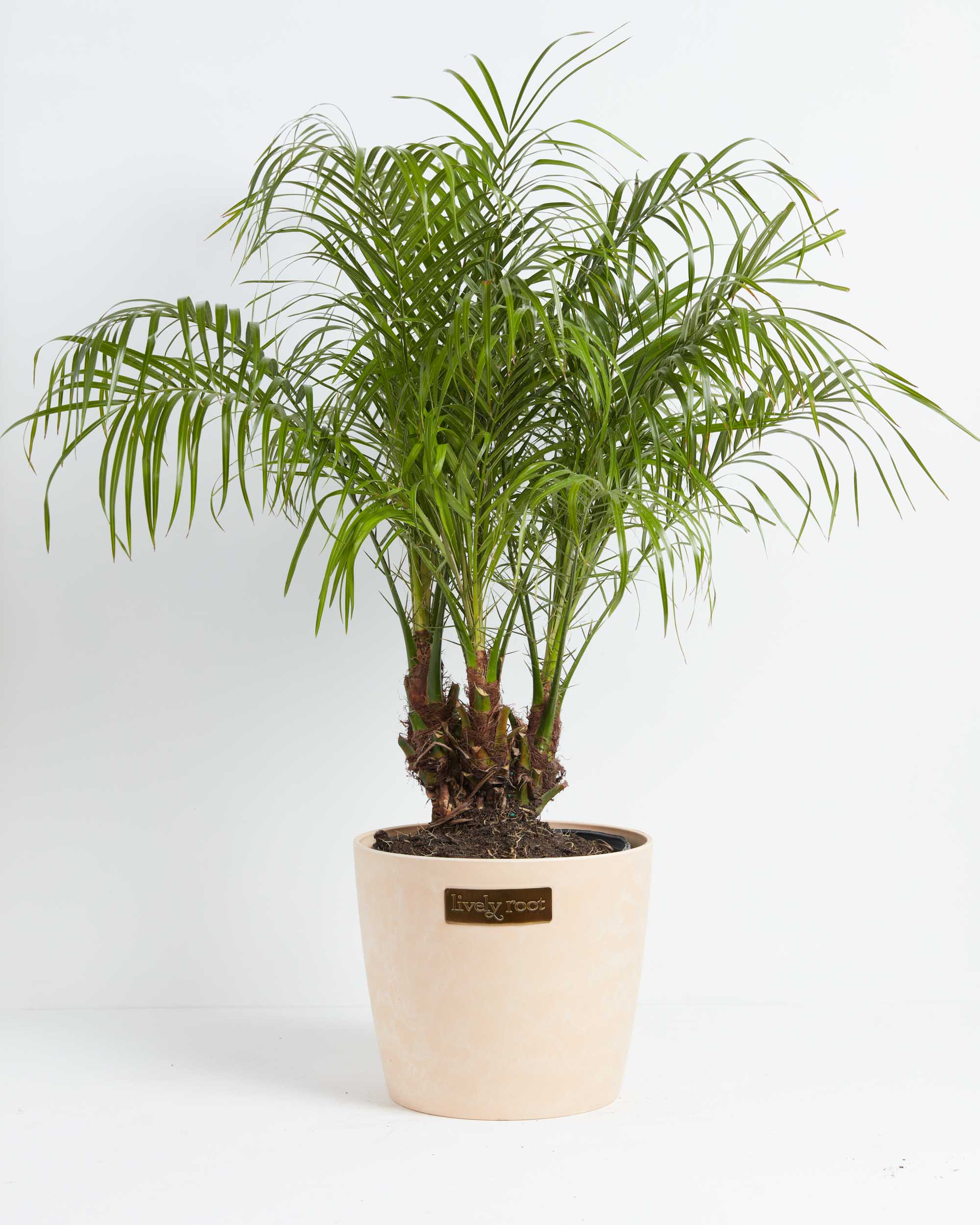
Pygmy Date Palm (Phoenix roebelenii). A slender trunk with fronds 2 to 4 feet long; the one that looks most like a true tree. Bright, indirect light; 60 to 80 degrees F; moderate humidity. Watch the small spines at the base of each frond.
- Level of care: Easy
- Pet-friendly: Yes
Ponytail Palm
Ponytail Palm (Beaucarnea recurvata). Not a true palm but an agave relative, with a swollen trunk that stores water and a fountain of narrow leaves. Bright light, including some direct sun; let the soil dry out fully between waterings.
- Level of care: Easy
- Pet-friendly: Yes
Indoor Palm Care Basics
Most indoor palms want the same three things: bright but indirect light, a pot that drains, and water only when the top inch of soil is dry.
Palm Trees: Watering and Light
Indoor palm trees thrive in well-draining soil that allows water to seep through. Keep the soil consistently moist but not waterlogged. Ensure they receive bright, indirect sunlight to maintain their lush green appearance.
Temperature and Humidity
Maintain a warm environment for your indoor palms, avoiding sudden temperature drops. Most varieties prefer temperatures between 60-75°F. Ensure moderate humidity, as palms generally appreciate slightly higher moisture levels.
Soil and Fertilizer
Use a rich, peat-based soil mix for optimal palm growth. Fertilize during the growing season (spring and summer) with a balanced liquid fertilizer to provide essential nutrients for healthy foliage.
Repotting and Propagation
Repot every two to three years, one pot size up, in spring. Palms like to be a little root-bound, so do not rush it. Propagation is by seed and slow; cat palms and parlor palms can be divided at repotting, the others cannot.
Indoor Palm Plants: Common Issues
Yellow fronds and soggy soil mean overwatering. Brown tips mean dry air or fertilizer buildup; flush the soil with plain water and mist or run a humidifier. Spider mites show up in dry rooms and come off with a shower and insecticidal soap.
Indoor Palm FAQs
Which palms are best for indoors? Parlor palm and cat palm for lower light, areca palm for a bright room, pygmy date palm for a tree shape, and ponytail palm if you forget to water. All five are pet-safe.
How do you care for indoor palm plants? Bright, indirect light, a well-draining potting mix, and water when the top inch or two of soil is dry. Feed monthly in spring and summer and skip fertilizer in winter.
Why is my indoor palm turning brown? Brown tips usually mean dry air, inconsistent watering, or fertilizer salts in the soil. Brown lower fronds are normal aging; trim them at the base. Yellowing with soggy soil is overwatering.
How long do palm plants live indoors? Ten years or more with steady light and watering. Parlor palms and ponytail palms are the longest-lived of the group; areca palms typically last around a decade in a pot.
Order Indoor Palms From Lively Root
Every palm ships from our nursery in 2 to 8 business days with a 30-day happiness guarantee. Pick a size above, choose a grower pot or an eco pot, and add a gift note at checkout if it is for someone else.
