





Popular Collections
Calathea Plants Care Guide
Calathea plants are some of the most distinctive indoor foliage plants you can grow. Their leaves look painted by hand, with stripes, brushstrokes, ovals, silver bands, pink lines, purple undersides, and reptile-like markings depending on the variety. Many Calatheas are also called prayer plants because their leaves shift throughout the day and often lift upward at night.
This collection is built for plant lovers who want a statement houseplant with more visual personality than a standard green foliage plant. Calatheas can thrive indoors when their basic needs are met: indirect light, consistent moisture, higher humidity, warm temperatures, and a well-draining potting mix.
Why Choose Calathea Plants?
Calathea plants are ideal when you want a plant that brings pattern, softness, and movement into a room. They work well on plant stands, shelves, desks, bedroom corners, bathrooms with natural light, and bright living spaces where direct sun does not hit the leaves.
Their biggest appeal is foliage. Unlike blooming plants that only show off seasonally, Calatheas provide year-round visual interest. A Rattlesnake Calathea brings long, wavy leaves with dark markings. A Medallion Calathea adds rounded leaves with layered green and purple tones. A Peacock Plant has feather-like markings and a stained-glass effect. Pinstripe Calathea varieties offer fine pink or white lines across deep green foliage.
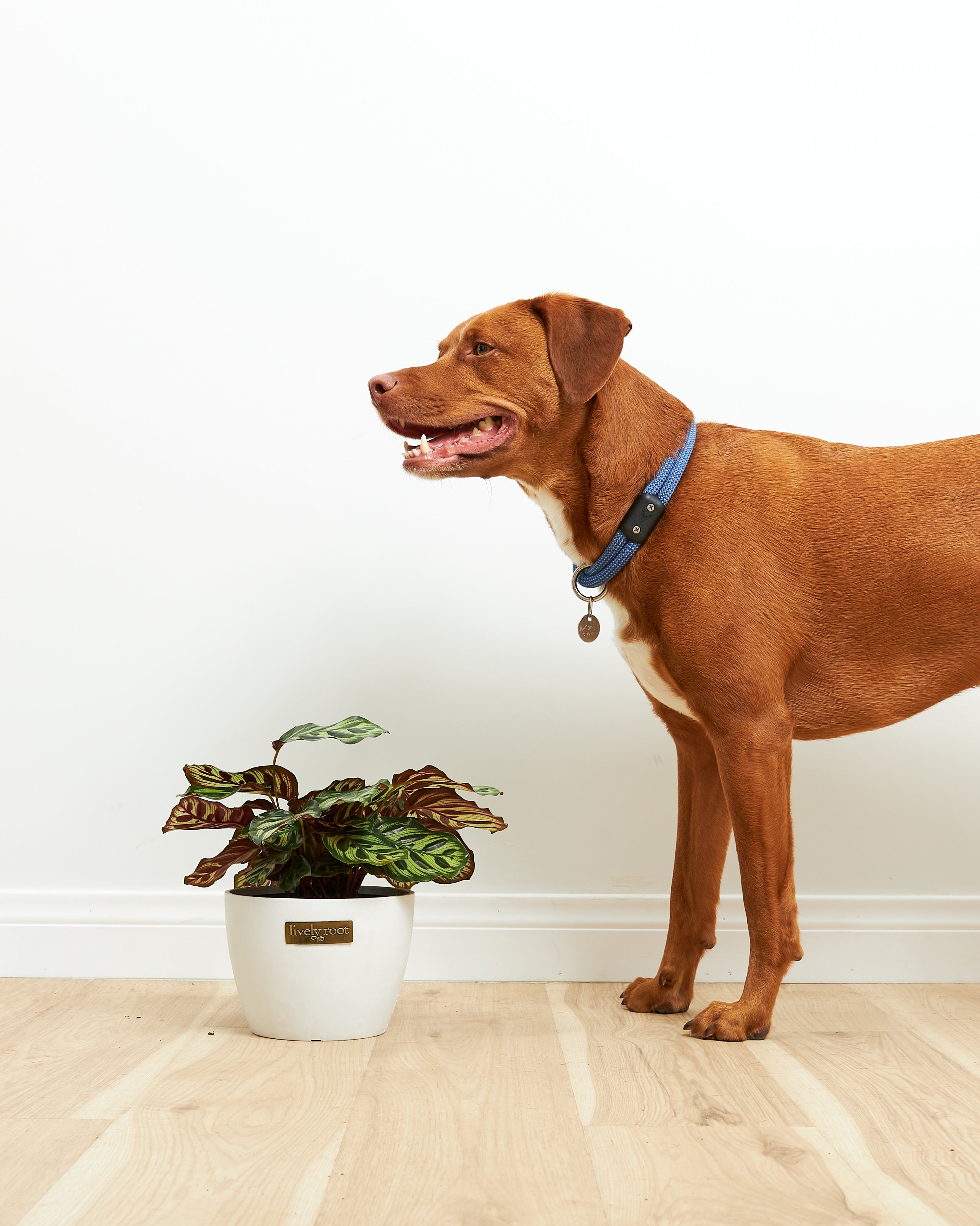
They are also a strong option for pet-friendly homes. Calathea plants are commonly chosen by cat and dog owners who want a decorative houseplant without relying only on palms, ferns, or peperomias.
Popular Calathea Plant Varieties
Different Calathea plants create different design effects, so choose based on the room and the look you want.
Calathea Rattlesnake is one of the most recognizable varieties, with long, narrow leaves and bold dark green markings. It is a good choice for anyone who wants movement and pattern without an overly compact shape.
Calathea Medallion has rounded leaves with layered, painterly markings and rich purple undersides. It works well as a tabletop or plant stand centerpiece.
Peacock Plant is loved for feather-like patterns that resemble a peacock’s tail. Its foliage brings a softer, more classic tropical look.
Pinstripe Calathea has elegant linear markings that feel more refined and architectural. It is a strong match for modern interiors.
Jungle Velvet Calathea adds deeper color and a plush look, making it useful where you want a richer, more dramatic foliage plant.
If your goal is a low-light tolerant plant, choose a spot carefully. Calatheas can handle lower indoor light better than many colorful plants, but they look and grow best in bright to medium indirect light.
How to Care for Calathea Plants Indoors
Calathea care is straightforward once you understand what these tropical plants dislike. They do not want harsh direct sun, bone-dry soil, cold drafts, or soggy roots.
Place your Calathea plant in bright, indirect light. An east-facing window, filtered window, or bright room away from direct afternoon sun is usually best. Direct sunlight can scorch or fade the leaves.
Keep the soil lightly and evenly moist, but never waterlogged. Water when the top layer of soil begins to dry, then let excess water drain completely. Do not let the roots sit in standing water. Many Calathea owners prefer filtered water, rainwater, distilled water, or tap water that has sat out overnight, especially if brown leaf tips are a recurring issue.
Humidity is important. Calatheas prefer a more humid environment than the average dry indoor room. A humidifier is the most reliable solution, but grouping plants together, using a pebble tray, or placing a Calathea in a naturally humid bathroom with indirect light can also help.
Use a rich, well-draining potting mix. A quality indoor potting soil amended with perlite can help hold gentle moisture while still allowing airflow around the roots. Feed lightly during the growing season with a balanced houseplant fertilizer, and reduce feeding in fall and winter.
Common Calathea Problems
The most common Calathea problems are usually tied to water, humidity, or light.
Brown or crispy leaf edges often point to low humidity, inconsistent watering, or mineral-heavy tap water. Increase humidity, keep watering more consistent, and consider using filtered water.
Yellowing leaves can happen when the soil stays too wet for too long. Check that the pot has drainage and that the plant is not sitting in water after each watering.
Curling leaves may mean the plant is too dry, too cold, or getting too much direct light. Move it away from harsh sun and check the soil moisture.
Root rot is a risk when Calatheas are overwatered or planted in dense soil without enough drainage. The goal is moist soil, not saturated soil.
Spider mites and fungus gnats can appear if plant stress or excess moisture builds up. Inspect the undersides of leaves, keep foliage clean, and avoid constantly soggy soil.
Calathea Plants and Pet Safety
Calathea plants are popular with pet owners because they are considered non-toxic to cats and dogs. That makes them a strong choice for homes where curious pets may share space with houseplants. Still, it is best to keep any plant out of reach of pets who like to chew leaves, since nibbling can still cause stomach upset or damage the plant.
For a pet-friendly indoor plant collection, Calatheas pair well with other non-toxic plants like parlor palms, peperomias, prayer plants, and certain ferns.
Calathea Plant FAQs
How much light does a Calathea need?
Calathea plants grow best in bright to medium indirect light. Avoid direct afternoon sun, which can scorch the leaves.
Can Calathea grow in low light?
Calatheas can tolerate lower light, but growth may slow and leaf color may become less vibrant. Bright, indirect light is the better long-term placement.
How often do you water a Calathea plant?
Water when the top layer of soil begins to dry. Keep the soil lightly moist, but never soggy.
Do you bottom water Calathea plants?
You can bottom water a Calathea if the pot has drainage, but remove excess water once the soil has absorbed moisture. Do not leave the pot sitting in water.
What kind of soil does Calathea need?
Use a rich, moisture-retentive but well-draining indoor potting mix. Adding perlite can improve drainage and reduce the risk of root rot.
Why are my Calathea leaves turning brown and crispy?
Brown, crispy edges are commonly linked to low humidity, inconsistent watering, direct sun, or mineral-heavy tap water.
How do you divide a Calathea plant?
The best time to divide a Calathea is during repotting. Gently separate a rooted section from the main plant and pot it into fresh soil.
