


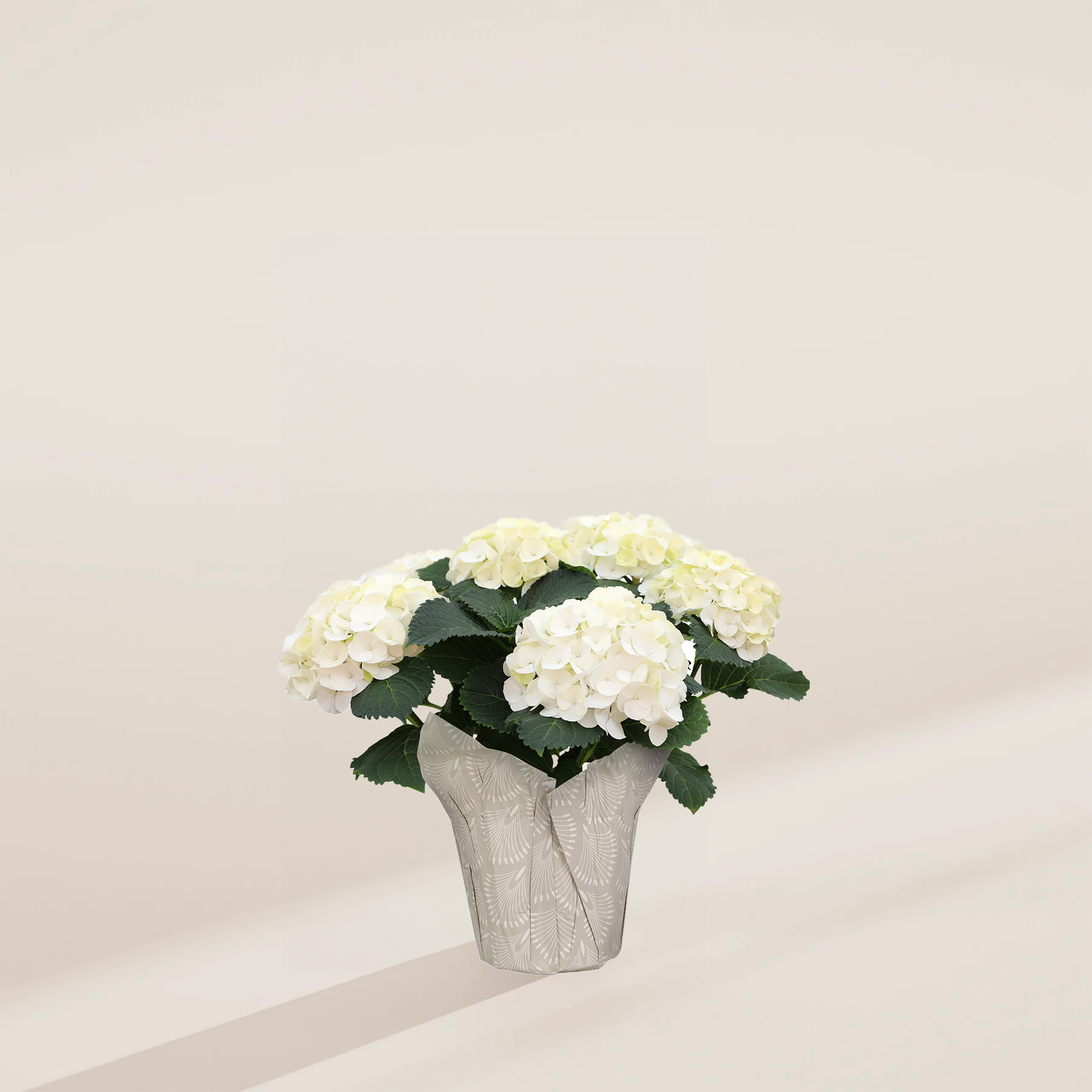


Hydrangea macrophylla
Big blooms. Classic white. Enduring garden beauty.
The White Heritage Hydrangea is a timeless favorite, known for its large, cloud-like blooms that open a crisp white and gracefully mature through the season. Its elegant flowers and full green foliage make it a beautiful anchor for garden beds, borders, or large containers.
Reliable and rewarding, this hydrangea offers long-lasting blooms, lush seasonal growth, and an effortless sense of balance that elevates outdoor spaces year after year.

Bright, indirect light is ideal — a north or east-facing window works well. Avoid harsh direct afternoon sun indoors, which can scorch leaves and fade blooms.
Keep soil consistently moist but never waterlogged. Water thoroughly when the top inch of soil feels dry, typically every 2–3 days. Hydrangeas will dramatically wilt when thirsty but recover quickly after watering.
Hydrangeas prefer moderate humidity around 40–60%. Misting the leaves occasionally or placing the pot on a pebble tray with water can help, especially in dry indoor environments.
Hydrangeas prefer cool to moderate temperatures. Avoid placing near heat vents, radiators, or cold drafts from windows. Prolonged exposure above 80°F can cause wilting and stress.
Potted hydrangeas are typically grown as temporary indoor bloomers but are hardy outdoors in Zones 3–9 depending on variety. Bigleaf types (most common in pots) are best suited for Zones 5–9.
Feed monthly during the growing season (spring through late summer) with a balanced, water-soluble fertilizer. For best blooms, use a formula higher in phosphorus. For a convenient, no-fuss option, our Instant Plant Food is a great choice — simply mix with water and apply during your regular watering routine. Do not fertilize in fall or winter when the plant is resting.
Repot in spring when roots begin circling the bottom of the pot or emerging from drainage holes. Choose a container 1–2 inches larger in diameter with good drainage. Use a rich, well-draining potting mix. Water thoroughly after repotting and keep in indirect light for 1–2 weeks while it adjusts.
Deadhead spent blooms by snipping the flower head just above the first set of healthy leaves. Remove any yellowing or dead foliage as needed. Wipe leaves gently with a damp cloth to remove dust and improve light absorption.
Take a 4–6 inch cutting just below a leaf node in late spring or early summer. Remove lower leaves, dip the cut end in rooting hormone, and plant in moist potting mix. Cover with a plastic bag to retain humidity and place in bright indirect light. Roots typically form in 3–4 weeks.


livelyroot.com
@livelyroot
[title]
[message]Love it? Add to your wishlist
Your favorites, all in one place. Shop quickly and easily with the wishlist feature!

