Customize Your Pot
Please Note: Size & position of custom text may vary slightly. Please allow an additional 1-2 days for processing your order.


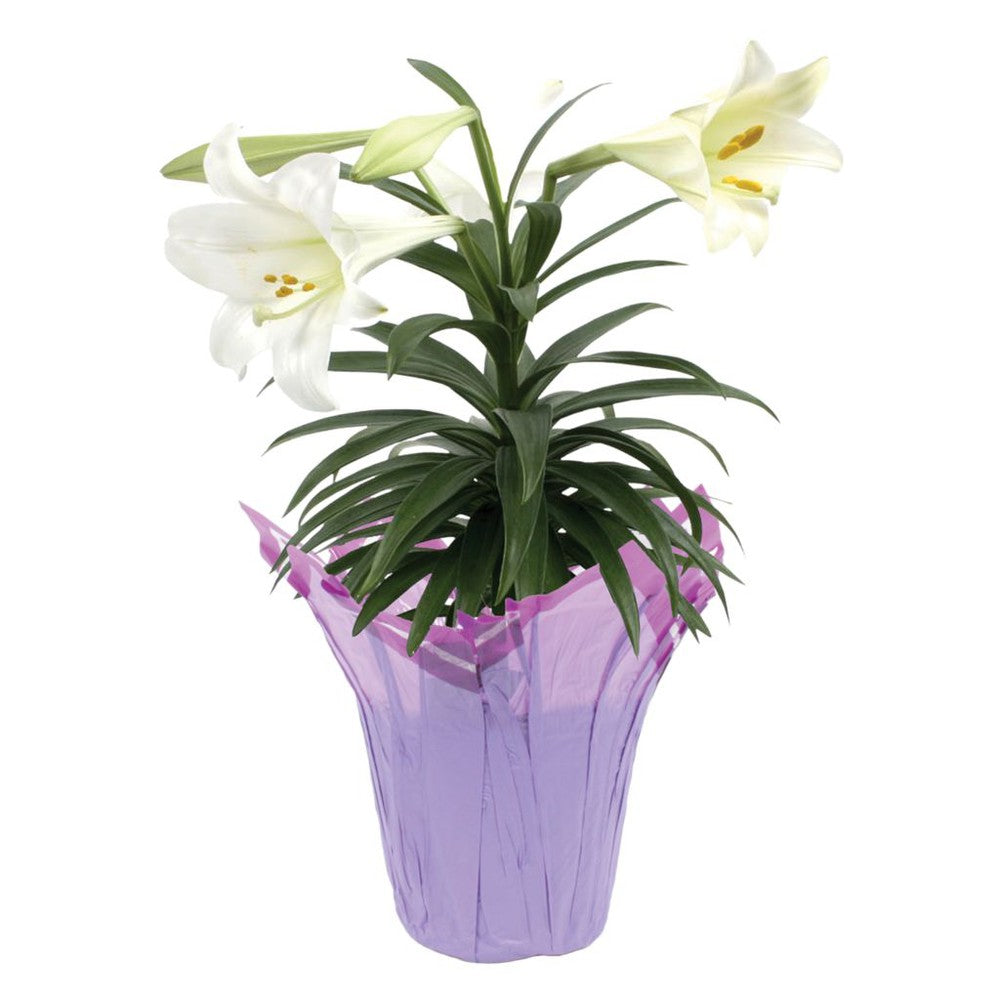
As the name suggests, this delicate white blossom is the official flower of the Easter holiday. The flower emerges from a bulb planted in the ground, which acts as a symbol of new life. The white color signifies hope, peace, and purity. Easter lilies, act as a reminder to celebrate this joyful season of renewal and rebirth.

Indoors: Keep the lily in bright, indirect light to produce blooms.
Outdoors: Plant the lily in part shade (4-6 hours) areas of the garden protected from hot afternoon sun that might scorch their leaves.
Keep the soil consistently moist but not soggy. Let them dry on the surface before watering again.
The lily enjoys and thrives in low to medium humidity.
Average comfortable room temperatures will be sufficient. Bring indoors when nights are under 60°F.
Plant in early spring after the last frost has passed. See our zone planting chart for details. Plan to leave the bulbs in the ground over the winter months if you're in zones 8-10. If you're using them as an annual in zones 3-7, lift them in the fall and overwinter in temperatures of 50°F-55°F.
Create a rich soil environment when planting initially. Add organic composted materials mixed into the soil. Use a 0-10-10 bloom boosting fertilizer every month during the growing season. Continue to apply each month until September.
Outdoors:
After the last frost date in your planting zone:
Plant lily bulbs in the fall.
Choose a partially shady place (4-6 hours) with morning sun and afternoon shade. Too much sunlight may burn the leaves, and too much shade will inhibit flowering.
Cultivate the native soil with organic matter like compost, bloom-boosting fertilizer (0-10-10), and bone meal amendments.
Keep the top one-third of the bulb exposed above the soil's surface.
Space multiple bulbs 12-15 inches apart.
Keep the soil consistently moist but not soggy during the growing season.
Indoors:
Before planting lily during the holiday season of November and December, expose the bulbs to temperatures of 50°F-55°F for 8 to 10 weeks. If held over from the previous year and planted, they will need to go through a dormancy period. Keep the bulbs cool (or refrigerated separately from fruit or vegetables) and in a semi-dark location until mid-September. After dormancy, plant in moist, well-draining potting mix with half of the bulb exposed above the surface. Place in bright, indirect light in warmer temperatures of 70°F to 75°F. In six to twelve weeks, blooms will appear.
Remove spent blooms by cutting the stem down to the base. When the lily leaves turn yellow in early fall, remove the leaves back within two inches from the top of the bulb. Prepare the bulb for dormancy storage in early fall.
Remove all soil traces and place in a 50°F-55°F cool, semi-dark place or the crisper of an empty refrigerator for 8-10 weeks.
Divide the bulbs in the fall. Remove the soil from the root system.
The bulblets will be growing attached to the side of the mother bulb. Pull downward until you hear a snap to separate the two. Untangle the roots between each bulb and separate. The bulblet should contain a healthy amount of roots to give them a good start. Store for dormancy or replant each bulb.
When replanting, set the bulb's pointy side facing upward. Cover with rich, nutrient soil (add amendments to heavy garden soil). Keep the soil consistently moist during development.