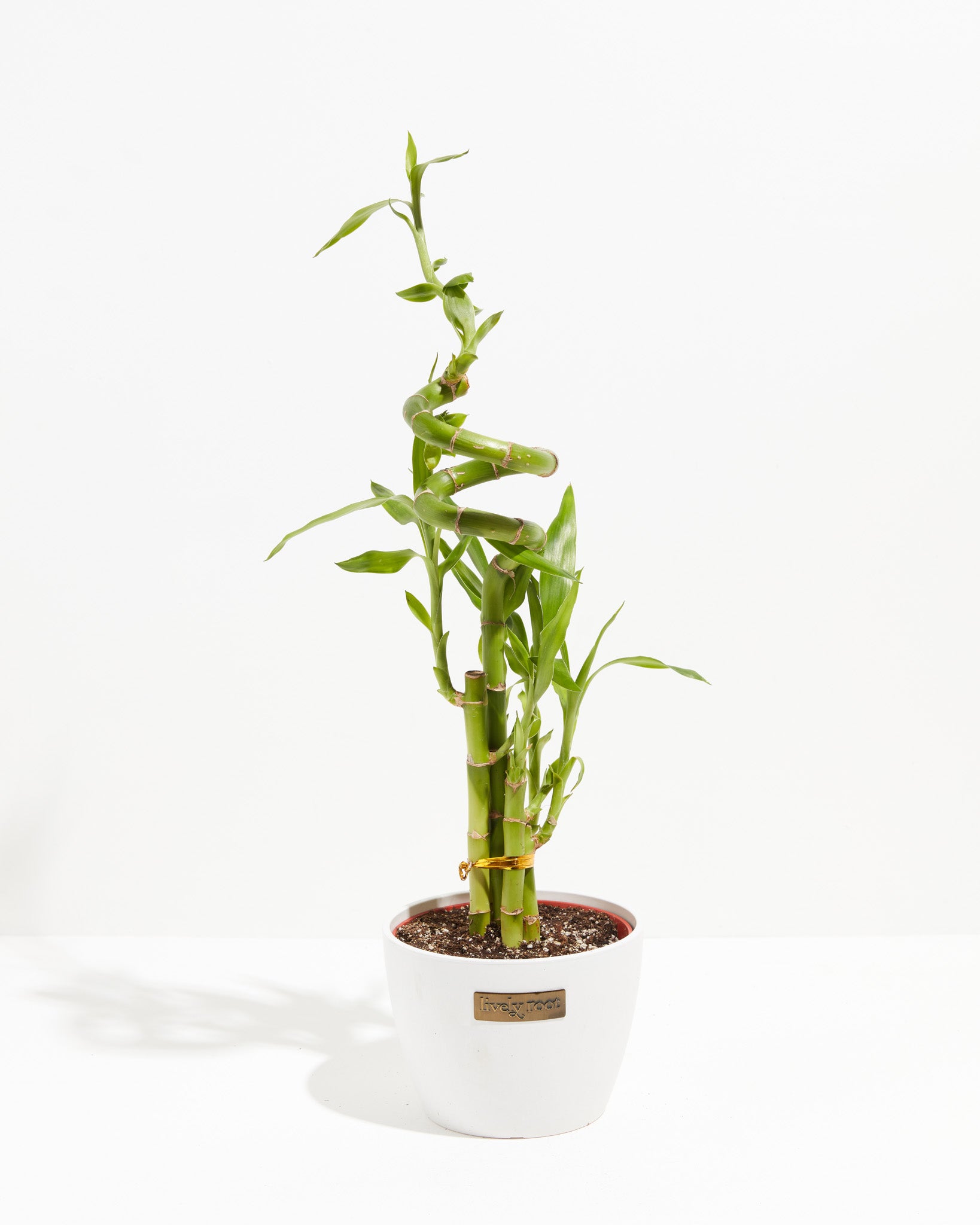
It's your lucky day! Get the Lucky Bamboo (Dracaena sanderiana) - a symbol of good fortune and prosperity! A unique Feng Shui plant, the Lucky Bamboo is easy to care for and a joy to have as a centerpiece in your indoor jungle. Its slender stems and vibrant foliage add elegance and natural beauty to any space. Dracaena Sanderiana enjoys consistently moist soil and bright, indirect light to thrive.

Give this Friendship Bamboo bright, indirect light to help the green leaves flourish.
Keep the soil consistently moist (but not soggy). Use filtered, bottled, or tap water sitting 24 hours to release the chemicals and water enough that the water discharges out of the drainage holes. Once the water is fully drained, replace into the cache or decorative pot. If growing in water, replace with fresh, filtered water every 7-10 days.
Average indoor humidity between 45-55% is adequate for this plant.
The Friendship Bamboo prefers warmer temperatures.
Outside: Place Friendship Bamboo in shade under a canopy of trees or on a covered porch. Leave outside in container pots until night time temperatures dip to 60°F. Inside: Set this plant in bright, indirect lighting.
The Friendship Bamboo is not a heavy feeder and can be ignored on this part. If you prefer, fertilize once in the spring and summer by diluting a liquid fertilizer by half strength. Let the plant rest in the fall and winter.
When receiving the plant, do not repot immediately but wait at least 6-12 months or if the roots are beginning to get crowded and growing through the drainage holes. Repot in the spring, using a 2" bigger pot to keep the roots drier. Use a well-draining indoor potting mix with perlite to help with drainage. Water your plant in the old pot before transferring over and let sit an hour. Place a piece of screening at the bottom of the container over the drainage hole to secure the soil and allow to drain. Add soil to the bottom to elevate the root ball. Lift the plant and release the roots against the existing planter. Use a clean knife or garden trowel to wedge between the pot and the soil to loosen. Inspect the root ball. Notice if there are any dead or rotting roots and trim off with sterile pruners. If the plant is rootbound, cut through the roots to alleviate continued encircling. Ensure the plant is sitting about 1" below the edge of the pot to avoid water spillage. Add more soil and backfill around the sides by tamping down. Fill up to the soil line but not over. Water thoroughly, leaving the soil damp but not soggy. If settling occurs, add more soil.
Prune your Friendship Bamboo as they become taller to keep control of their height. Instead of cutting the main stalks, concentrate on the exterior offshoots with sterile scissors. Keep them a little shorter than the central stalk to give them a broader look. While watering monthly, set them in a sink and use a watering can with a shower end. Fill with nonchemical water and shower them from above, cleaning all the leaves of dust accumulation. Let drip dry.
Remove at least one leaf joint and crop the leaves to reveal the growth nodes. Place the cutting into filtered or distilled water to cover the base of the cutting. Refresh the water each week as the red roots appear within 30 days. Once the roots are plentiful, plant them in a well-draining potting mix or set in a vase of pebbles filled with water and replace the moisture weekly.
Lucky Bamboo, scientifically known as Dracaena sanderiana, is not an actual bamboo plant but a member of the Dracaena genus. Originating from the tropical rainforests of Southeast Asia, this plant has become popular worldwide for its charming appearance and symbolic significance. The Lucky Bamboo plant is relatively easy to care for and can thrive in various conditions. As a symbol of luck, prosperity, and good fortune in Chinese culture, it’s a popular choice for gifting and interior decoration. Lucky Bamboo is toxic to pets if ingested, so caution should be taken in households with furry friends.
Caring for Lucky Bamboo is simple and rewarding, making it an excellent choice for both beginner and experienced plant enthusiasts. Explore the essential aspects of nurturing this auspicious plant so it thrives in your home or office environment.
If you grow your Lucky Bamboo in water, change the water every week to 10 days to prevent stagnation. Water your Dracaena (if grown in a pot) every 10 days in the summer and less frequently in the winter. Place your Lucky Bamboo plant in a spot with indirect light, avoiding direct sunlight to prevent leaf burn.
Maintain temperatures between 65°F and 90°F (18°C and 32°C), protecting the plant from drafts and extreme temperature fluctuations. Lucky bamboo thrives in average indoor humidity levels.
Lucky Bamboo can grow in soil and water alike. Repot only when necessary, using a container with adequate drainage holes and a well-draining potting mix. Feed the plant with a diluted liquid fertilizer once during the growing season.
Lucky Bamboo propagation is typically done from stem cuttings. It’s best to root them in distilled water. Within about a month, roots will appear and you can plant the cutting in a potting mix. Alternatively, grow your new Lucky Bamboo plant in a vase with pebbles at the bottom filled with water.
Trim any yellow or damaged leaves using clean scissors to maintain the plant’s appearance. Wipe the leaves gently with a damp cloth to remove dust and keep them clean. Watch out for signs of yellowing leaves, which may indicate overwatering or exposure to direct sunlight.
Learn more about the best placement for your Good Luck Bamboo plant, explore suitable companion plants to complement its growth, and consider alternative pet-friendly plant options if you own pets.
Enhance the aesthetics of your Lucky Bamboo with these companion plants from Lively Root:
Explore these alternative pet-friendly plants as a delightful alternative to the Lucky Bamboo plant:
Elevate your space with the charm of Lucky Bamboo! Bring good fortune and greenery into your home today!


livelyroot.com
@livelyroot
[title]
[message]Love it? Add to your wishlist
Your favorites, all in one place. Shop quickly and easily with the wishlist feature!