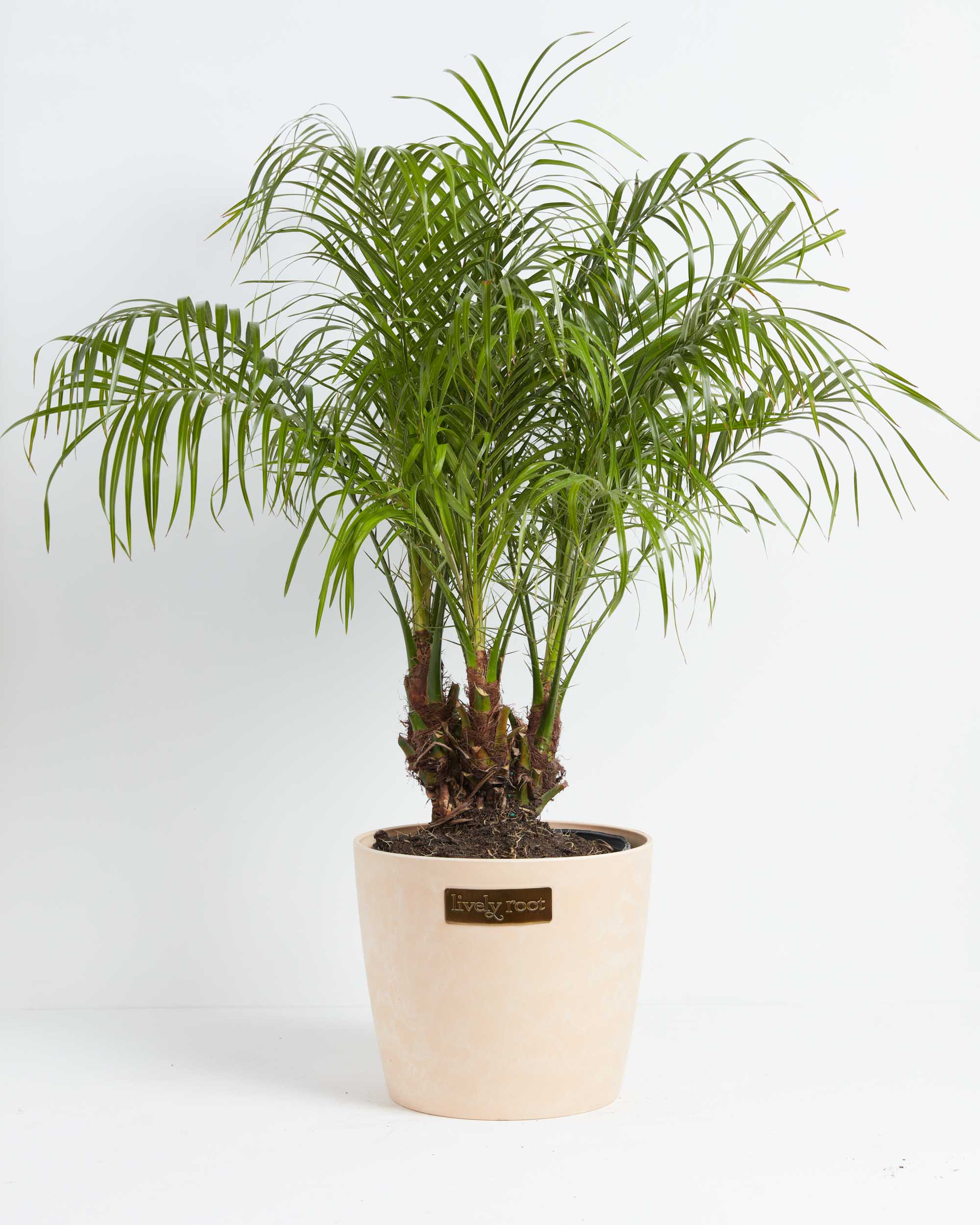
The pygmy date palm (Phoenix roebelenii), also sold as the dwarf date palm, miniature date palm or Robellini palm, is a slow-growing feather palm from Southeast Asia and southern China. Indoors it typically settles at 4-6 ft; outdoors in USDA zones 10-11 it can reach 6-12 ft. It wants bright, filtered light, water once the top of the soil dries, and nights above 50°F. It is non-toxic to cats and dogs, though the sharp spines at the base of each frond make it worth placing away from small children and pets.

Best in medium to bright indirect light.
Water well when received, then allow the soil to dry out between waterings. Enjoys being on the moist side.
Enjoys humidity. Spritz occasionally.
Keep in their ideal temperatures so that they will remain healthy.
Outside: Keep in filtered sun to full shade. Nightime temperatures need to remain above 50°F for healthy growth.
Apply a slow release fertilizer especially formulated for rose plants because these palms like the magnesium to prevent yellow spots on the fronds. Apply once during the spring, summer and fall season. If using a liquid fertilizer, use at half strength monthly throughout the growing season. Let rest during the winter.
When receiving the plant, do not repot immediately but wait at least 6-12 months or if the roots are beginning to get crowded and growing through the drainage holes.
Repot in the spring, using a 2" bigger pot. Use a well-draining indoor potting mix with perlite to help with drainage.
Water your plant in the old pot before transferring over and let sit an hour. Place a piece of screening at the bottom of the container over the drainage hole to secure the soil and allow to drain. Add soil to the bottom to elevate the root ball. Lift the plant and release the roots against the existing planter. Use a clean knife or garden trowel to wedge between the pot and the soil to loosen.
Use sterilized pruners and remove any dead, damaged, or diseased fronds off the plant. Wear gloves to remove the sharp spines at the leaflets' base on the fronds. Prune away fronds that are at the base of the plant. It is not unusual that the plant will shed their lower leaves from time to time. To clean debris and dust off the leaves:
Place the palm in a shower or tub.
Fill a watering can with a shower spout with filtered, bottled, or water free of chlorine and fluoride.
Shower the leaves, so each one is clear of dust and dirt.
Let the water drain and replace your palm in the decorative container.
Release the soil around the sucker with a garden fork. Carefully uncover and remove the sucker and associated roots. Do not disturb the mother plant.
Using a sharp knife to cut the sucker while keeping in tack the detached portions fibrous roots. Repair and add soil around the parent plant.
Reduce long, leafy shoots by removing about half of the stem and leaves.
Plant the sucker into a well-draining potting mix with perlite added.
Water well after securing the soil around the roots. Keep a consistent watering schedule for the first year.
The Pygmy Date Palm, scientifically known as Phoenix roebelenii, is a popular ornamental palm characterized by its graceful arching fronds and slender trunk. This gorgeous palm typically grows to around 6-12 feet in height, making it ideal for both indoor and outdoor spaces. Native to Southeast Asia, the Date Palm belongs to the Arecaceae family. It thrives in USDA hardiness zones 10-11, preferring full sun to partial shade. While it produces small, date-like fruits, they are not commonly eaten. Known for its low-maintenance nature, the Pygmy Palm Tree is an excellent choice for novice gardeners.
In Feng Shui, the Dwarf Date Palm symbolizes good luck and prosperity.
The Dwarf Date Palm is a low-maintenance plant that makes a beautiful addition to any indoor or outdoor space. With the proper care, this elegant miniature date palm can thrive and bring a touch of the tropics to your home.
The Pygmy Palm prefers bright, indirect light but can tolerate partial shade. It thrives in temperatures between 65-85°F (18-29°C) and should be protected from cold drafts and frost.
Water the plant regularly, keeping the soil consistently moist but not waterlogged. Pygmy Palms also appreciate higher humidity levels, so occasional misting can be beneficial, especially in drier environments.
Use well-draining soil, ideally a mix designed for palms or a combination of peat, sand, and loam. Feed your Pygmy Date Palm with a balanced, slow-release fertilizer during the growing season, typically from spring to early summer. Repot your Dwarf Date Palm every 2-3 years or when it outgrows its container, using fresh soil to provide adequate nutrients.
Prune dead or yellowing fronds to maintain the plant’s appearance and health. Watch for common issues, such as spider mites, scale, and root rot, and address them promptly to keep your Robellini Palm healthy and vibrant.
The Pygmy Date Palm can be propagated from seeds or by separating the offshoots (suckers) from the mother plant. These develop in the first few years of your Dwarf Date Palm’s life and grow their roots. Gently cut the suckers off and plant them in soil, which should be kept moist at all times.
Indoors, watch for spider mites in dry winter air - a fine stippling on the fronds is the first sign. Raising humidity and rinsing the foliage monthly usually prevents them.
No - the pygmy date palm is not toxic to cats or dogs. It does, however, carry sharp, needle-like spines at the base of each frond. These can deliver a painful puncture and are the real hazard with this plant. Wear gloves when pruning, and site the palm where pets and small children will not brush against the lower fronds.
The Pygmy Date Palm is versatile and adaptable, making it a delightful addition to various settings. Here are some ideas for the best placement, companion plants, and alternative plants.
Pair your Pygmy Date Palm with these complementary indoor plants:
If you’re looking for similar, pet-friendly plants, consider these alternatives from Lively Root:
Outdoors they tolerate full sun once established, but prefer filtered sun to partial shade - especially while young. Indoors, bright indirect light near a window suits them best; harsh direct sun through glass can scorch the fronds.
Only briefly. They are hardy in USDA zones 10-11 and need nights above 50°F for healthy growth. Short dips near freezing cause frond damage; a sustained hard freeze will usually kill the plant. In colder zones, grow it in a container and bring it indoors over winter.
Yes. It is one of the better indoor palms - it stays manageable in a pot, handles average household humidity, and tolerates lower light than most palms. Outside zones 10-11 it is usually grown indoors year-round or moved out for summer only.
Bring a touch of the tropics into your home or office with a Dwarf Date Palm!! Its easy-care nature and aesthetic appeal make it the perfect plant to enhance any space.


livelyroot.com
@livelyroot
[title]
[message]Love it? Add to your wishlist
Your favorites, all in one place. Shop quickly and easily with the wishlist feature!