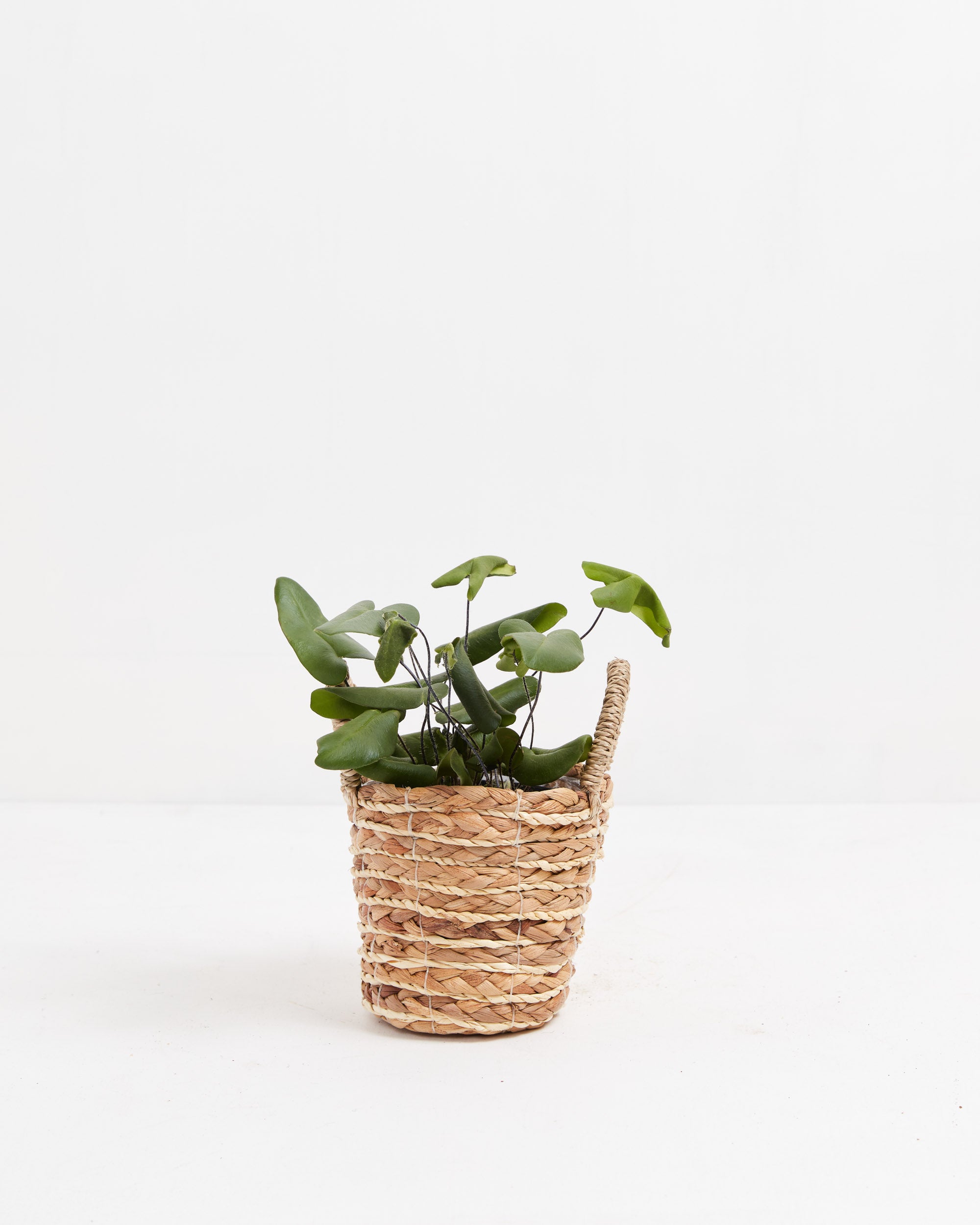
The unique flora of the Hemionitis Arifolia or Heart Leaf fern isn't your usual lacey shape. Instead, their heart-shaped or tongue-shaped leaves have a leathery feel to them. The stems have a velvety feel as they reach 3 to 5 inches in length. Some leaves are sterile, and some are fertile. On the forest floor, they grow as an epiphyte (grows upon other plants.)

Indoors: Bright indirect light.
Keep your Heart fern consistently moist but not in soggy soil. Use filtered, bottled, or tap water that is sitting 24 hours to release the chemicals and water enough to discharge out of the drainage holes. Once the water is fully drained, replace them into the cache or decorative pot.
This heart fern enjoys and thrives in 70% humidity.
Warmer room temperatures and adding a humidifier to their surroundings will help them thrive.
This Heart Leaf fern thrives in bright indirect sunlight where temperatures are above 60°F and high humidity.
Apply a balanced, liquid fertilizer especially formulated for indoor plants every month. Apply during the spring, summer, and fall seasons. Let them rest during the winter.
When receiving the Heart Fern, do not repot immediately but wait at least 6-12 months or if the roots are beginning to get crowded and growing through the drainage holes.
Repot in the spring, using a 2 inches bigger pot to give the roots room to spread.
Place a piece of screening at the bottom of the container over the drainage hole to secure the soil and allow to drain. Use a rich, well-draining indoor potting mix amended with 25% compost and to help with fertility.
Water your plant in the old pot before transferring over and let sit an hour.
Add soil to the bottom to elevate the root ball. Lift the plant and release the roots against the existing planter. Use a clean knife or garden trowel to wedge between the pot and the soil to loosen.
Inspect the root ball. Notice if there are any dead or rotting roots and trim off with sterile pruners. If the plant is rootbound, cut through the roots to alleviate continued encircling.
Ensure the plant is sitting about 1 inch below the edge of the pot to avoid water spillage. Add more soil and backfill around the sides by tamping down. Fill up to the soil line but not over.
Water thoroughly, leaving the soil damp but not soggy. If settling occurs, add more soil.
Water well to dampen the soil and let them drain.
If the leaves on your fern dry out or become crispy, trim off the stems down to the base. Keep the base and roots moist and new fronds will form eventually. Place them on a pebble tray to keep the humidity high. Remove any debris on the soil and replenish if necessary.
Propagate and divide your Heart Fern in the spring.
Hydrate the plant the night before.
Pull from the container and brush or wash away the soil carefully around the roots. Carefully divide or cut through the clump with a sterilized knife. Repot the fern in rich, indoor peat-based potting soil Be aware that each new plant needs several leaves with sufficient roots attached.
Use a container 2 inches bigger than the root ball with drainage and deep enough for their roots to grow. Place the plant at the same level as the previous pot adding soil at the bottom.
Water the soil and add more soil if settling occurs.
Set them in medium to bright, indirect sunlight while they are rooting. Place a large, clear plastic bag, spritz with water on the interior and place over the new plant to create a humid environment.
Check the moisture and humidity each day and add misting to keep the soil moist while the roots establish.
After 6-8 weeks, roots will begin to establish. You can tug onto the stem to ensure the roots are anchoring well. Remove the plastic bag but keep the air humid around them with a pebble tray and misting.
An attractive and unusual indoor plant, the Heart Leaf Fern (Hemionitis arifolia) has smooth, leathery leaves growing on dark stems. The leaves are shaped like an elongated heart or the tip of an arrow, which gives this cute small plant its name; it’s also known as the Heart Fern or the Heartleaf Fern.
This heart-shaped fern is an epiphyte in the Pteridaceae family. In its native Southeast Asian habitats, it grows on trees and fallen logs on the forest floor. It is suitable for hardiness zones 11-12 and can grow as a porch plant. It prefers high humidity and reaches only about 8 inches in height, which makes it a popular choice for terrariums.
This petite fern thrives in warm and humid environments. As a tropical plant that grows under the canopy of the trees in nature, the Heart Fern plant thrives in bright to medium light but needs protection against direct sun rays. It’s not the easiest plant to grow, but its unique beauty and intricacy make it a fantastic houseplant for experienced plant lovers. Like many other fern plants, the Heart Fern is pet-friendly and safe to have around pets or small children.
According to Feng Shui, Hemionitis arifolia heart fern symbolizes love and harmony and brings balance and emotional understanding. Its heart-shaped leaves make it the perfect gift for that special person in your life.
If you love fern plant greenery, consider adding the finely textured Lemon Button Fern and the delightfully exotic Kangaroo Fern to your collection.
There are several essential things to know about Hemionitis arifolia care. These charming little plants thrive in humid and warm conditions that mirror their natural tropical habitat. Follow these Heart Fern care tips to keep your plant happy and thriving:
The Heart Leaf Fern prefers moist but never soggy soil, so water it regularly. Use filtered or ‘overnight’ water since this fern can be sensitive to fluoride or chlorine found in tap water. High levels of humidity (70%) are required for this fern plant. Use a humidifier, keep it on a pebble tray, or place it in a humid room, like the kitchen or bathroom.
Concerning the Heart Fern light requirements, it prefers consistently bright but indirect light. Keep it out of direct sunlight, as it can scorch its leaves, leaving unsightly brown spots. Warmth is another requirement for this tropical fern; choose a warm location with 60℉ - 85℉.
The best Heart Leaf Fern care includes planting it in well-draining, chunky soil amended with nutrient-rich compost. Feed your Fern every month with a balanced liquid fertilizer for indoor plants. Repot your fern once every two years, providing a 2-inch larger pot with good drainage.
The easiest Heart Fern propagation method is division. Divide in spring at the beginning of the growing season. Water the night before and then carefully untangle the fern’s roots into several plants with roots and leaves attached.
One of the Heart Fern benefits is that it doesn’t need frequent pruning. Remove any dead or wilted leaves if necessary. If your fern looks dry and has a lot of brown leaves, trim it to the base and keep the soil evenly moist until you see new fronds growing.
Too much sunlight or heat often produces crisp, brown leaves on your Heartleaf Fern. It’s also sensitive to underwatering, which can cause its leaves to curl inwards and get brown. Check regularly for pests like aphids or mealybugs and use an organic insecticide if necessary.
The Heart Leaf Fern is compact and will thrive in various spaces, provided it gets sufficient light and humidity.
You can set off the lovely, emerald foliage of the Hemionitis arifolia plant by grouping it with other small plants with light to dark green foliage:
Other fabulous ferns that will refresh your living space with their unique foliage include:
Treat yourself to the delightful Heart Fern from Lively Root that will add green charm to your space!


livelyroot.com
@livelyroot
[title]
[message]Love it? Add to your wishlist
Your favorites, all in one place. Shop quickly and easily with the wishlist feature!