


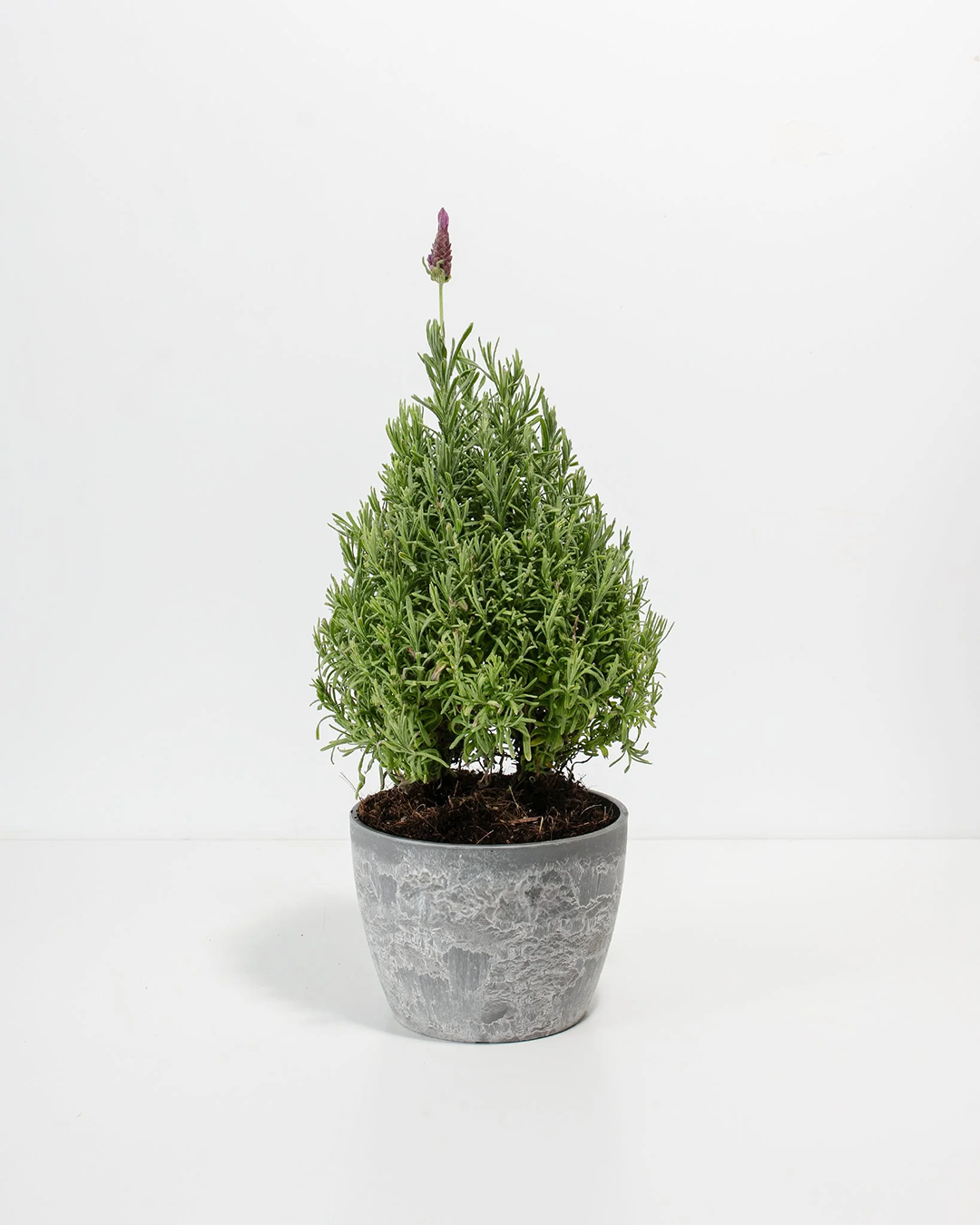


This Lavender Topiary (Cone) (Lavandula stoechas 'Primavera') is a fragrant decorative beauty adorned with tiny purple flowers that bloom all summer long! Pro tip: Place this potted herb in your kitchen and always have fresh lavender on hand for those tasty dishes this holiday season!

Plant lavender in full sun for best flowering.
Water deeply to 1 foot and let the soil dry out between waterings. In the winter, slow down the watering when the weather is mild.
This variety of lavender tolerates more humid climates.
Nights: 56°F to 64°F Days: 65°F to 76°F
This is a heat tolerant lavender in the deep south and may bloom all summer into fall.
Fertilize monthly during the growing season with a water-soluble organic mix around the plant's dripline (being careful not to touch the leaves).
To transplant into a garden bed, water your plant the night before. When planting your Lavender, ensure the soil is well-draining. Add soil amendments like compost or sand to lighten it. Check the soil pH and ensure it's between 6.7-7.3 (slightly alkaline). If you have acidic soil, add lime. Dig the hole twice as wide as the grower pot and the same depth (not deeper). Remove the Lavender and center in the hole. Add rooting hormone around the base of the roots. Water in the hole before covering with soil and let drain. Then add organic compost mixed with your native soil and fill around the plant and up to the top of its soil line. Tamp down with your hands to remove any air pockets. Water again around the drip line, then mulch up to the plant's drip line to help retain moisture. Keep her soil moist as she gets established. She will tolerate hot weather better than most and has long-lasting bloom time into the fall months in the south!
After the first flush of Lavender bloom has finished, cut the plant back by half to encourage more growth and flowers.
Stem cutting: When plants begin to bloom in the spring, prune 4-6 inch stem cuttings with no buds or bloom from the parent plant. Remove leaves on 1/3 of the bottom half of the stem with pruners. (Do not tear off.) Dip the ends in root hormone (mixed in water at a paste consistency) and place 1-2 inches down in damp, well-draining, moist potting soil mix and tamp down around the stem to secure it. Use a 2-3 inch container with drainage and is deep enough for the roots to grow. Mist inside a clear plastic bag to create moisture and humidity and place the bag over the top of the plantings loosely. There is no need to tie off the bag but allow a little airflow under and into the planting pot. Set it in bright, indirect sunlight while they are rooting. Check the moisture and humidity each day and add misting to the soil (not the leaves) while the roots establish. After 6-12 weeks, roots will begin to form. You can tug onto the stem to ensure the roots establish after new growth begins. Transplant to the garden after the roots are mature.
The Lavender Topiary Tree is a beautiful miniature tree version of classic lavender, perfect for adding charm and fragrance to both indoor and outdoor settings. Shaped into a neat, cone-like form, this lavender topiary resembles a small holiday tree with dense, gray-green foliage and delicate purple blooms. Beyond its visual appeal, lavender is a versatile culinary aromatic herb; its aromatic leaves are not only ornamental but also excellent for cooking and crafting.
Its botanical name, Lavandula stoechas ‘Primavera’, is well-suited to hardiness zones 5-9, where it thrives in sunny locations. As a sun-loving plant, it requires plenty of sunlight and moderate care, including regular watering and occasional pruning, making it a symbol of tranquility and elegance. Generally safe for pets, lavender is non-toxic, though moderate ingestion can occasionally cause mild digestive upset.
The Lavender Topiary, known for its striking shape and pleasant aroma, is relatively easy to care for, making it a great choice for beginners and busy plant lovers alike.
Lavender prefers moderate watering - allowing the soil to dry out slightly between watering sessions. Overwatering should be avoided, as lavender thrives in lower humidity environments, resembling its native Mediterranean climate. Mist sparingly, as too much moisture can lead to root rot.
Lavender thrives in bright, direct sunlight and requires at least 6 hours of light daily to maintain its lush green appearance and fragrant blooms. Ideal indoor temperatures range between 60°F-75°F, but lavender can tolerate some outdoor exposure in USDA zones 5-9.
This scented plant thrives in well-draining, slightly alkaline soil, so a mix designed for cacti or succulents works well. If kept indoors, it should be repotted annually in early spring, or the top layer of soil in its outdoor pot should be refreshed.
Feed your lavender with a balanced, diluted fertilizer every 6-8 weeks during its growing season. Prune back blooms and excess foliage regularly to encourage shape and maintain its topiary form.
Propagate lavender through softwood cuttings in spring or early summer for best results. Watch for signs of leaf yellowing or wilting, which can indicate too much water. Look for aphids or mites and treat with insecticidal soap as needed. Dust or wipe leaves regularly to keep them healthy and pest-free.
Lavender Topiary trees are versatile plants that brighten up any space with their unique shape, delightful scent, and easy-care nature. Here’s how to make the most of their placement and uses.
Pair your Lavender Topiary trees with these wonderful plants for a lush display:
If you’re looking for alternatives to the Lavender Topiary, consider these options available on Lively Root:
Bring home the festive charm of a Lavender Topiary from Lively Root today - perfect for adding a touch of elegance and fresh aroma to any space!


livelyroot.com
@livelyroot
[title]
[message]Love it? Add to your wishlist
Your favorites, all in one place. Shop quickly and easily with the wishlist feature!

