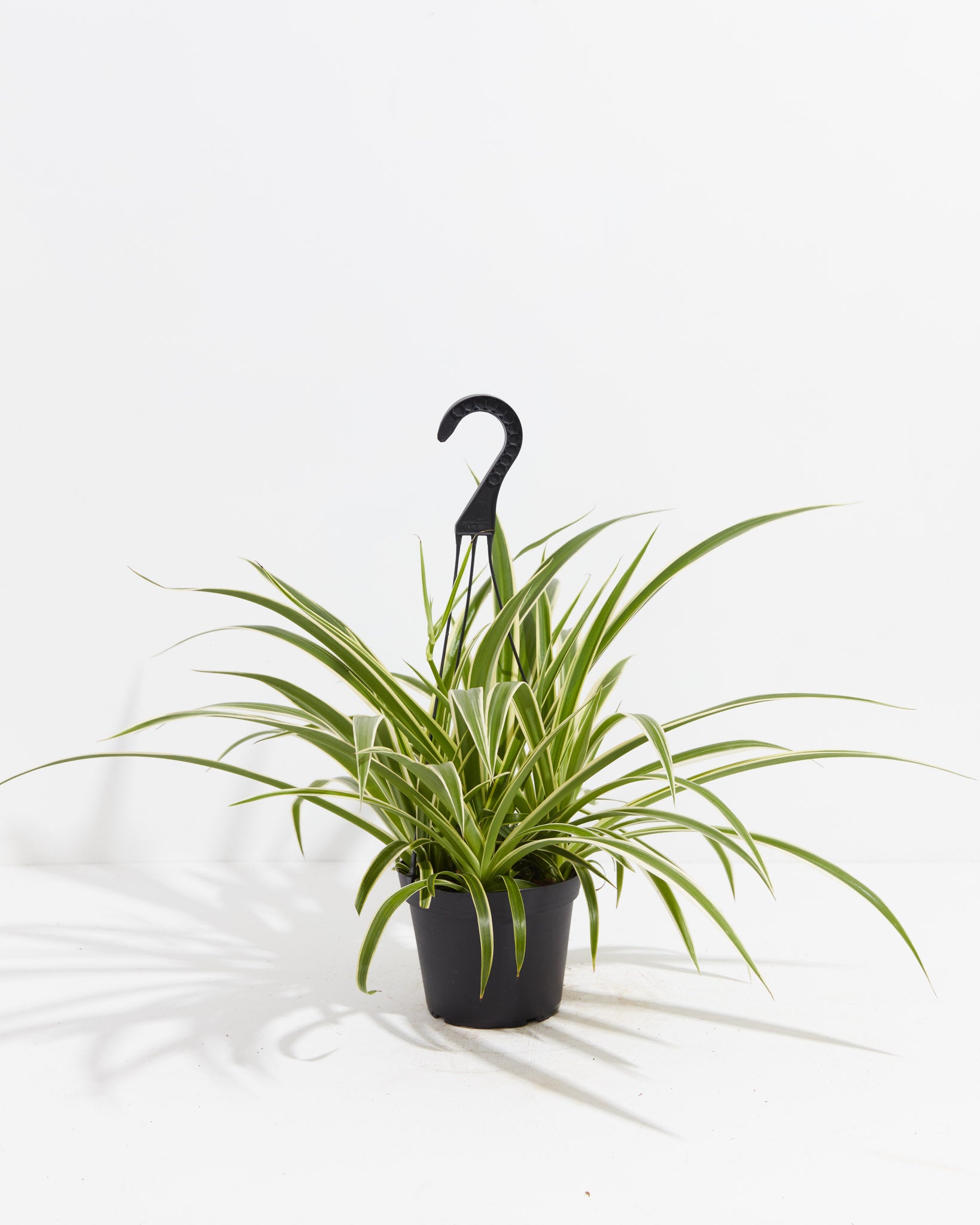
Our Spider Plant is the Reverse form of Chlorophytum comosum: green leaves with an off-white stripe along each outer edge, the opposite of the classic white-center look. It is low-maintenance and non-toxic to cats and dogs, according to the ASPCA.
These beauties are easy to care for and look great on a tabletop or hung from a macrame sling. You can even keep them out on the patio during summer but remember to bring them inside if there's any risk of frost.

This plant prefers low to medium levels of indirect sunlight, and can handle bright light when filtered, but avoid direct sun to prevent leaf scorch.
Water well, but make sure the soil doesn't become soggy, since the fleshy, tuberous roots can rot if the root ball stays wet; always use a pot with drainage holes.
Does well in moderate humidity. Dry winter air can cause brown tips.
Spider plants will endure temperatures as low as 35°F without injury, but temperatures below 65°F retard growth.
Outside: Grow in morning light, partial shade (4-6 hours) where nights are above 45°F, in Part Shade to Full Shade. Outdoors, it does best in zones 9 to 11, in a shaded bed or container.
Indoors: This plant prefers bright, to medium indirect light for at least six hours near a south-, east- or west-facing window. One of the best spider plant tips is to filter bright light so the variegated forms stay vibrant.
Fertilize monthly during the growing season. Use a balanced liquid fertilizer at 1/2 strength. Reduce fertilizing during the fall and winter months while the plant is dormant. If brown tips form, withdraw from fertilizing. Raise the humidity around them and avoid chlorinated or fluoridated water.
Repot the Spider Plant in the early spring in a well draining soil mix. Use a container with drainage holes. Add a piece of screen to keep the soil from spilling out but allowing drainage. Water the plant ahead of time to hydrate. Add the mix to the bottom of the new slightly larger container. Tease the roots if the root ball is root bound in the pot, loosening the fleshy tuberous roots before placing it in the fresh pot of soil. Carefully place them in the center, adding backfill around the edges. Leave a 1/2 inch of space between the soil and the top edge to prevent water spillage. Water thoroughly and let drain.
If foliage needs a trim back, use sterilized scissors. Cut back to the base of the stem and the spiderettes. Trim off any blackened or brown tips to keep energy going to the main plant. Remove any dead, damaged or diseased leaves and clean debris from soil. Replenish soil as needed.
Remove a spiderette from the mother plant. Dip the end where the leaves originate into rooting hormone powder. Place in dampened soil. Cover the spiderettes with a clear, plastic bag and mist. Check soil moisture periodically. Within six weeks, the roots should be getting established. Place in bright to medium, indirect light and follow care instructions.
We know it can be daunting buying plants, especially online. That's why we offer a happiness guarantee to ensure you are completely satisfied with your new plants.

The Spider Plant (Chlorophytum comosum) is one of the most popular indoor houseplants. It has long, striped leaves growing in bushy spikes. This variety is a Reverse Variegated Spider Plant that boasts white stripes on both sides of the lime-green leaf, instead of in the middle. This flowering plant can produce long offshoots with tiny, white, star-shaped flowers all year round in the right conditions.
Native to the tropical regions of Africa, it loves a warm and slightly humid environment. It's an adaptable plant that you can grow outdoors in warm weather in hardiness zones 9-11. The Spider Plant belongs to the Asparagaceae family which includes asparagus and Dracaena plants.
Spider plants thrive in medium indirect light and are easy to care for, making them excellent beginner plants. Moreover, the Spider plant is non-toxic to cats and dogs, hence it's suitable for plant lovers with pets.
There are many Spider plant varieties, like the round-shaped Curly Spider Plant, the compact Dwarf Spider Plant, or the regular Variegated Spider Plant, which has leaves with a single middle stripe.
Spider plants are easy to grow indoors when you provide them with the right conditions. Here are some important Spider Plant care tips to keep your plant in great shape:
Water your Spider plant well, and wait until the top inches of the soil feel dry before the next watering. Spider plants can be sensitive to chemicals contained in tap water, so it's best to water with filtered or distilled water. Medium humidity is sufficient for your reverse Spider plant, and because it has fleshy roots, avoid letting the root ball sit in soggy soil or brown tips may form.
The Spider plant can adapt to low-light conditions, however, it prefers medium indirect light for optimal growth and flowering. Bright light is fine when filtered, but direct sun can cause leaf scorch on the variegated forms. Your reverse Spider plant can withstand temperatures as low as 35°F but thrives in temperatures, ranging from 70°F to 90°F. Anything lower than 65°F will slow down the plant's growth.
Because it can be susceptible to root rot, the ideal soil for your Spider plant with reverse variegation should be well-draining. You can add some perlite to improve drainage. Feed your plant with a balanced liquid fertilizer diluted to half strength once a month during the growing season. Don't overfertilize as this can harm your plant. Repot your Chlorophytum comosum plant every 2 years.
If you're wondering how to propagate your Spider plant, it's easy. You'll see your plant growing slender flowering stems with miniature Spider plant babies from the mother plant, called spiderettes or plantlets. You can grow new plants by removing them and planting them in damp soil. Using rooting hormone before placing them in pots with soil can speed up the root development.
Trim brown or damaged leaves at the base with clean scissors to keep your plant looking its best, but leave the healthy growing tips intact. Move it out of direct sun to avoid leaf scorch. Brown tips on your Spider plant can indicate that you're fertilizing it excessively. Crisp, dry tips can also be due to lack of humidity, underwatering, or using tap water that contains chlorine or fluoride. Mushy, yellow leaves that fall off easily are a sign of overwatering.
How often should I water a spider plant?
Once the top inch of soil feels dry. Empty the saucer so the fleshy roots never sit in water.
Do spider plants need direct sunlight?
No. Bright to medium indirect light keeps the stripes crisp, and direct sun can scorch the leaves.
Where is the best place to put a spider plant?
A bright spot with filtered light, such as a shelf or a hanging basket where the plantlets can trail.
Getting live Spider plants is the perfect way to create a vibrant, green corner in your home or office.
Having a Spider Plant in your home creates a lush, jungle atmosphere, especially if you group it with other tropical plants, like we did in our Jungle Starter Plant Collection.
If you're looking for other plant varieties, consider these beautifully bushy and lush houseplants that will add vitality and elegance to any interior:
Wondering where to buy spider plants? Order yours here: pick a size, then a grower pot or Eco Pot. Gift options are available in the cart, and every plant ships with our 30 Day Happiness Guarantee.


livelyroot.com
@livelyroot
[title]
[message]Love it? Add to your wishlist
Your favorites, all in one place. Shop quickly and easily with the wishlist feature!