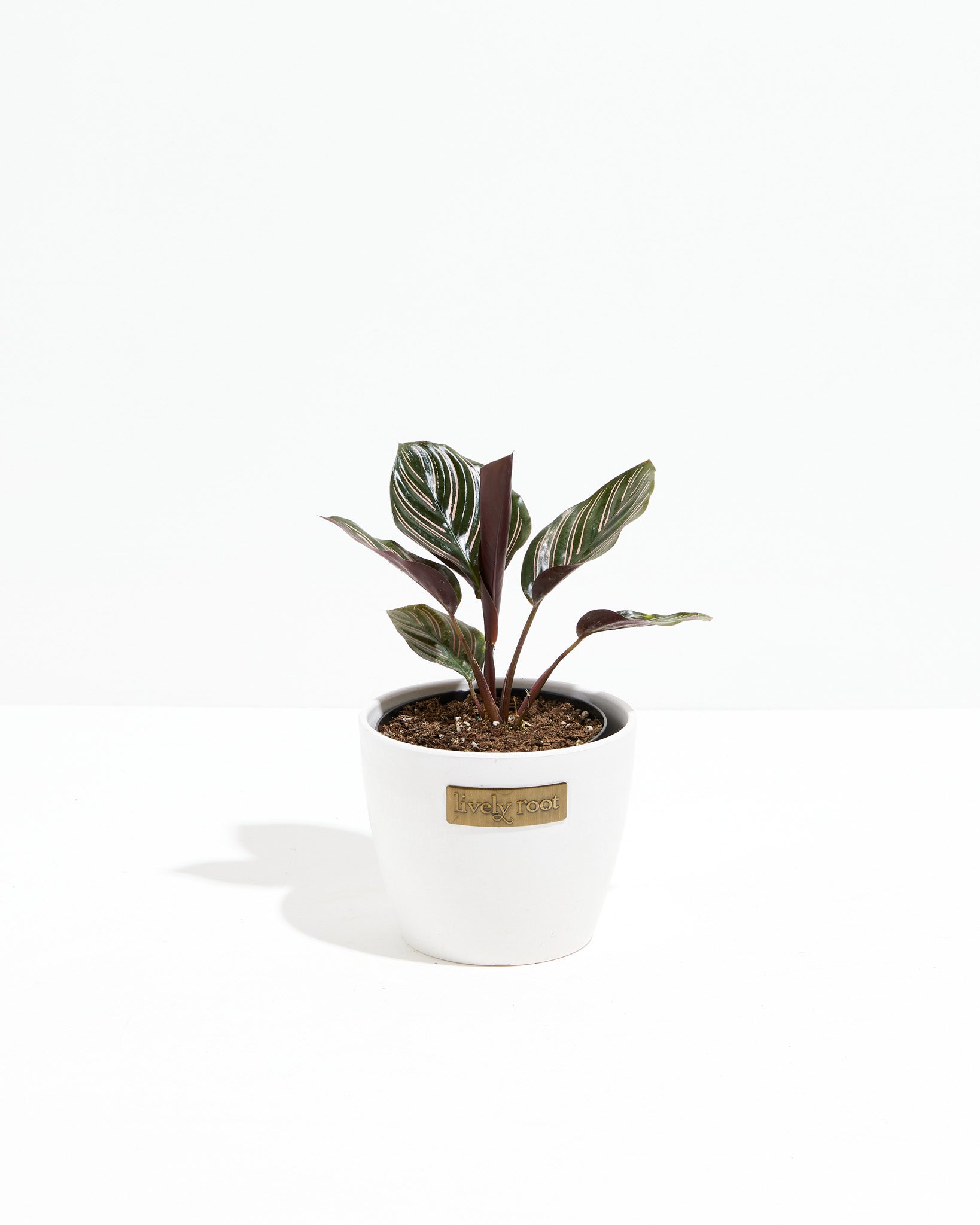
Your Pinstripe Calathea (Calathea ornata 'Pinstripe') will swoop you off your feet. The delicate cream to pink brush strokes appear to be a drawn path to never, neverland. We imagine fairies following it to the enchanted forests where charming creatures abide. When evenings are upon you, you'll find the leaves almost disappear with a new maroon leaf showing off on display. Except, it's the underside of the same leaf bidding all the fairies good wishes until they return. Add this enchantment to your bedside table as you dream of such things.

This plant enjoys bright to medium indirect light.
Keep the soil slightly moist and water when the soil reaches a #5 on the moisture meter. Use filtered, bottled, or tap water sitting 24 hours to release the chemicals and water enough to discharge out of the drainage holes. Once the water is fully drained, replace it into the cache or decorative pot. Don't let the roots sit in standing water. During winter months, water less frequently but keep it humid around the plant.
Add up to 60% humidity by adding a pebble tray filled with water, grouping with other plants or using a humidifier.
Guard your Pinstripe plant against temperatures below 60°F to avoid foliage damage.
Outside: Grow in morning light, partial shade (4-6 hours) where nights are above 45°F. Indoors: The Zebra Plant prefers bright to medium, indirect light for at least six hours in a southern, eastern and western windows.
Fertilize monthly during its growing period. Use a high nitrogen liquid fertilizer at half strength to increase foliage health. Reduce during the fall and winter months while the plant is in its dormant phase. Flush the soil periodically to eliminate salts from fertilizing.
When receiving the plant, do not repot immediately but wait at least 6-12 months. Repot in the spring, using a 2" wider pot. (Too large of a pot could cause the soil to dry slower, which is not helpful.) Use a well-draining indoor potting mix with perlite to help with drainage or an african violet potting mix. Place a piece of screening at the bottom of the container over the drainage hole to secure the soil and allow it to drain. Add soil to the bottom to elevate the root ball. Lift the plant and release the roots against the existing planter. Use a clean knife or garden trowel to wedge between the pot and the soil to loosen. Inspect the root ball. Notice if there are any dead or rotting roots and trim off with sterile pruners. If the plant is rootbound, cut through the roots to alleviate continued encircling. Ensure the plant is sitting about 1" below the edge of the pot to avoid water spillage. Add more soil and backfill around the sides by tamping down. Fill up to the soil line but not over. Water thoroughly, leaving the soil damp but not soggy. If settling occurs, add more soil. Enclose the new plantings in plastic bags, mist and keep them in medium light. Remove the plastic bag when the roots are established. You may observe some leaf changes as it acclimates to its new environment. It may suffer some transplant shock depending on how tight the roots were intertwined together. Trim off any declining leaves as it regains its energy and gets rooted into the soil over time.
Trim off any dead or damaged stems to keep energy moving to the healthy leaves. Shower the leaves using a watering can with filtered or rainwater to remove dust. Remove any debris on the soil and replenish soil if needed.
Indoors: Propagate and divide Zebra plants in the early spring when emerging from dormancy. Pull from the container and brush or wash away the soil carefully. Carefully divide and repot in a rich, indoor potting soil mix or African violet mix. Use a container that has drainage and is deep enough for the roots to grow. Set it in medium to bright, indirect sunlight while they are rooting. Enclose the new plantings in clear plastic bags, mist and keep them in medium light. Remove the plastic bag when the roots are established. You may observe some leaf changes as it acclimates to its new environment. It may suffer some transplant shock depending on how tight the roots were intertwined together. Trim off any declining leaves as it regains its energy and gets rooted into the soil over time. Check the moisture and humidity each day and add misting to keep the soil moist while the roots establish. After 6-8 weeks, roots will begin to establish. You can tug onto the stem to ensure the roots are anchoring well. You can remove the clear plastic bag at this time but still maintain high humidity around the plant. Outdoors: Carefully loosen the soil and dig the roots up and separate the plant in new locations in your garden. Add rich, damp, and loamy soil in a part-shade morning sun location. Water with filtered or rain water at soil level.
Calathea Pinstripe (Calathea ornata) is a rare and sought-after tropical plant that features dark green foliage and fine pink stripes. It’s also known as the Pinstripe prayer plant or Pinstripe plant. This beauty adds color and texture to any exotic plant arrangement, whether on a plant stand or your office desk.
Calathea ornata originates from South America and belongs to the Marantaceae family. This houseplant does best in USDA Zones 10-11 when kept outdoors, as it thrives in warm and humid environments. Carining for this Calathea variety is moderately easy once you understand its growing requirements. The Pinstripe plant is cat- and dog-friendly, so worry not about your pets. It symbolizes renewal and new beginnings.
Other beautiful Calathea varieties include the popular Peacock Plant and the collector’s favorite Calathea Rattlesnake.
Calathea Pinstripe care is pretty straightforward, as long as you ensure that it’s kept in a spot with high humidity. Check out our helpful tips below to enjoy a lush, thriving plant.
Ensure the soil is consistently moist but not waterlogged. Use filtered water for the best Calathea ornata care. Use a humidifier if needed and mist the plant occasionally to increase moisture in the air around it.
Understanding Calathea light requirements will help you maintain the patterns and colors of your Pinstripe plant’s foliage. Provide medium to bright indirect light and protect it from the harsh rays during summer afternoons. If you keep your Pink Pinstripe Calathea on the porch, partial shade is best. Temperatures, ranging from 60℉ to 75℉, are ideal for this beauty.
When it’s time to repot your Calathea ornata plant (about every 2 years), use well-draining soil (with added perlite) and a slightly larger container. Feed your Calathea Ornata Pinstripe each month with a balanced fertilizer to maintain healthy roots and foliage.
To propagate this Prayer plant variety, use the division method in early spring (during repotting). Transplant the sections with strong roots in small pots and cover them with a transparent plastic sheet to maintain high humidity. Keep the soil moist.
Proper Pinstripe plant care requires only light pruning and occasional cleaning. Trim any damaged leaves to promote new growth. Wipe the healthy ones with a damp cloth to remove accumulated dust. Common prayer plant issues include yellow or curly leaves, which indicate sudden changes to its environment.
The Calathea Pinstripe plant’s eye-catching, patterned foliage makes it a great statement plant that creates a focal point. However, as part of a larger plant display, it easily adds texture and color.
Pair your Pinstripe Calathea plant with other tropicals to create a lush indoor jungle:
Consider the following alternative plants that offer a similar vibe:
Get the unique Pinstripe Calathea for sale from Lively Root and add fresh greenery to your home or office!