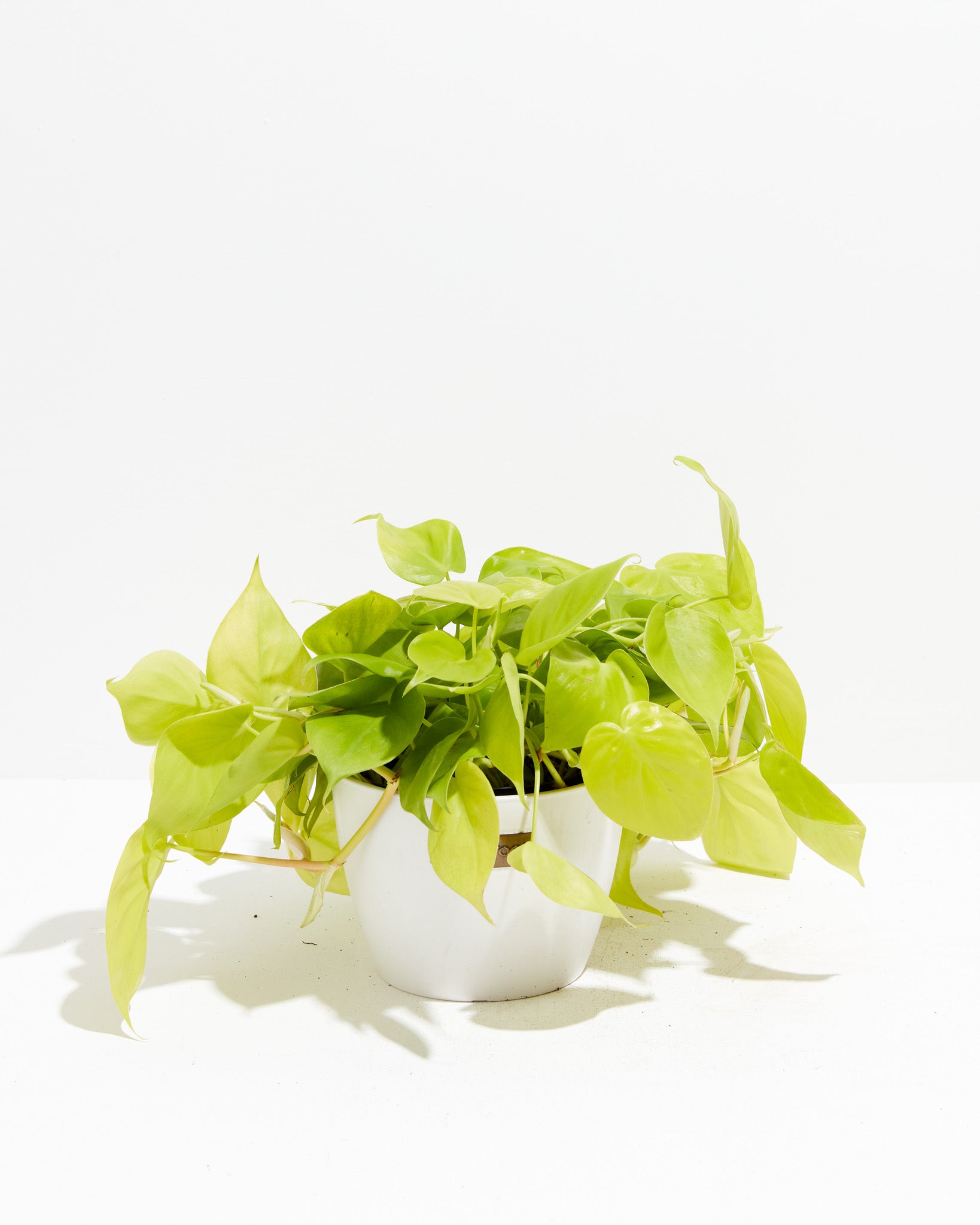
Meet the beautiful Neon Philodendron (Philodendron cordatum 'Neon') with vibrant heart-shaped leaves and a cascading growth habit! This vining epiphyte is a popular and much-loved indoor plant that shares features with the pothos plant. Neon Philodendron thrives in medium-lit areas (northern or eastern exposure). Water when the topsoil is dry to keep the leaves looking lush and healthy.

Set this plant in a northern or eastern facing window for medium, indirect light.
Allow the top half of the soil to dry out between waterings. Use filtered, bottled, or tap water sitting 24 hours to release the chemicals and water enough that the water discharges out of the drainage holes. This plant does not like to sit in water. Once the water is fully drained, replace them into the cache or decorative pot.
Average humidity levels at least 40% is adequate for this plant's needs.
Keep this plant out of cold drafts near open windows or doors.
This plant will not tolerate frost or temperatures below 60°F if left outside.
Apply a liquid fertilizer especially formulated for indoor plants. Water the soil before application each time. Apply during the spring, summer and fall season. Let them rest during the winter.
When receiving the Philodendron Neo plant, do not repot immediately but wait at least 6-12 months. Repot in the spring, using a 2"" bigger pot. (Too big of a pot could cause the soil to dry slower, which is not helpful.) Place a piece of screening at the bottom of the container over the drainage hole to secure the soil and allow to drain. Use a well draining potting mix with perlite. Lift the plant and release the roots against the existing planter. Use a clean knife or garden trowel to wedge between the pot and the soil to loosen. Inspect the roots. Notice if there are any dead or rotting roots and trim off with sterile pruners. Ensure the plant is sitting about 1 inch below the edge of the pot to avoid water spillage. Add more soil and backfill around the sides by tamping down. Fill up to the soil line but not over. Water thoroughly, leaving the soil damp but not soggy. If settling occurs, add more soil. Water well to dampen the soil and let drain.
To clean the leaves and alleviate dust particles, give them a shower from above. Fill a watering can with filtered, distilled or tap water that has been sitting for 24 hours. Place the plant in a sink and lightly wash the leaves with a shower spray end watering can. Trim off any brown or yellowing leaves with sterile scissors. Remove any debris from the soil and replenish soil if needed. Inspect for any insects at this time.
Stem Cutting: In early spring, take a philodendron cutting, use sharp pruners to remove a cutting from a tip off the vine. Cut at least 5-6 inches of stem to propagate with aerial root or nodes attached. Place in a vase with water to root. Change the water each week with filtered, bottled, or tap water sitting at least 24 hours. After 3-4 weeks, check to make sure the stem has 1-2 inch, well-formed roots. If so, it's time to plant. *Fill a small container with drainage holes (too large of a container for the cutting will make it challenging to regulate watering needs) using an indoor well-draining potting mix. Mix a little rooting hormone into the soil. Poke a hole in the soil with a pencil. Then, place the cutting in the hole and tamp the soil down around it. Water the plant and keep it in medium to bright indirect sunlight. After 4-6 weeks, the roots should establish. Division: Divide the philodendron in the early spring when emerging from dormancy. Pull from the container and cut through the roots with a sharp knife or pruners. Repot in a rich, indoor potting soil mix. Use a container 2 inches bigger than the root ball with drainage and is deep enough for the roots to grow. Place the roots at the same level as the previous pot adding soil at the bottom if necessary. Set it in bright, indirect sunlight and water. Check the moisture and humidity each day and add misting to keep the soil moist while the roots establish. After 6-8 weeks, roots will begin to form.
The Neon Philodendron (Philodendron cordatum ‘Neon’) is a stunning vining plant with radiant, lime green foliage. This beauty is an epiphyte native to Central and South America, where it grows as a climbing vine in the understory of the rainforests.
A gorgeous tropical plant, the Philodendron Neon belongs to the Araceae family and is perfect for hardiness zones 9-11. Surprisingly easy to care for, the Cordatum Philodendron grows lush, cascading vines that look amazing in hanging containers. Growing it as a hanging plant will also help keep it away from your pet’s reach, as Philodendrons are toxic to cats and dogs if ingested.
This adorable plant’s heart-shaped leaves make it a powerful symbol of love and affection; given as a gift plant, it will convey your love to your partner, friends, or family members.
Make sure to check out other captivating Philodendron plants, like the fabulous Philodendron Ring of Fire or the dramatic Philodendron Pink Princess, for arresting and unusual additions to your plant collection.
Philodendron Cordatum care is relatively easy, as long as you provide the right growing environment. This easy-going plant is perfect for beginners due to its adaptable and undemanding nature.
Watering correctly is an essential part of caring for Philodendron Cordatum. Use tap water that’s sat for 24 hours to release the chemicals, or opt for distilled or filtered water. While this plant enjoys moist soil, the top few inches should be allowed to dry before repeated watering. Don’t let the soil get soggy, as Philodendrons are susceptible to root rot if overwatered.
Philodendron Cordatum thrives in medium to high humidity. Use a humidifier, mist your plant regularly, or place it on a pebble tray to increase humidity.
The Neon Philodendron isn’t finicky about its light requirements. It grows best in medium to bright, indirect light but can also adapt to low-light conditions, although it won’t grow as lush. Avoid placing it in direct sunlight, as it can damage its leaves.
Being a tropical plant, the Neon Philodendron loves average to warm temperatures, ranging from 60°F-85°F. Keep it away from doors and windows to avoid cold drafts.
Use a well-draining potting soil mixed with coco coir or orchid bark to provide the best growing conditions for your Philodendron. Add vermiculite or perlite to improve drainage. Feed your Neon Green Philodendron with a balanced liquid fertilizer for indoor plants. Dilute the fertilizer by half strength and water your plant well before fertilizing to prevent burning the roots.
Repot your Neon Philodendron once every 2 years in spring. Use a slightly larger pot to allow its roots space to grow. Water well the day before repotting.
Taking stem cuttings in spring is the best method for Neon Philodendron propagation. Cut stem cuttings of about 5-6 inches with nodes or aerial roots attached. Put them in a clear vase filled with water. Change the water weekly until the roots form, and then plant in moist, well-draining soil. You can also divide large plants when repotting.
Regular pruning in spring or fall is a vital part of Philodendron Neon care. Remove damaged or dried leaves, or trim the vines to keep your plant in shape. Shower the leaves gently with distilled or filtered water from a watering can to remove dust and debris.
Common Philodendron issues include crisp leaf tips due to underwatering or low humidity, and soft stems and yellow leaves because of overwatering. Check regularly for pests like spider mites or mealybugs and use insecticide if needed.
The Neon Philodendron is an amazing plant with long, climbing or trailing stems perfect for decorating shelves or windowsills.
Your Neon Philodendron will look amazing when contrasted with indoor plants with glossy green foliage:
Because the Philodendron Cordatum is toxic to pets when ingested, you may want to check out these pet-friendly plants instead:
Add charm and glamour to your space with a dazzling Philodendron Neon Cordatum from Lively Root!


livelyroot.com
@livelyroot
[title]
[message]Love it? Add to your wishlist
Your favorites, all in one place. Shop quickly and easily with the wishlist feature!