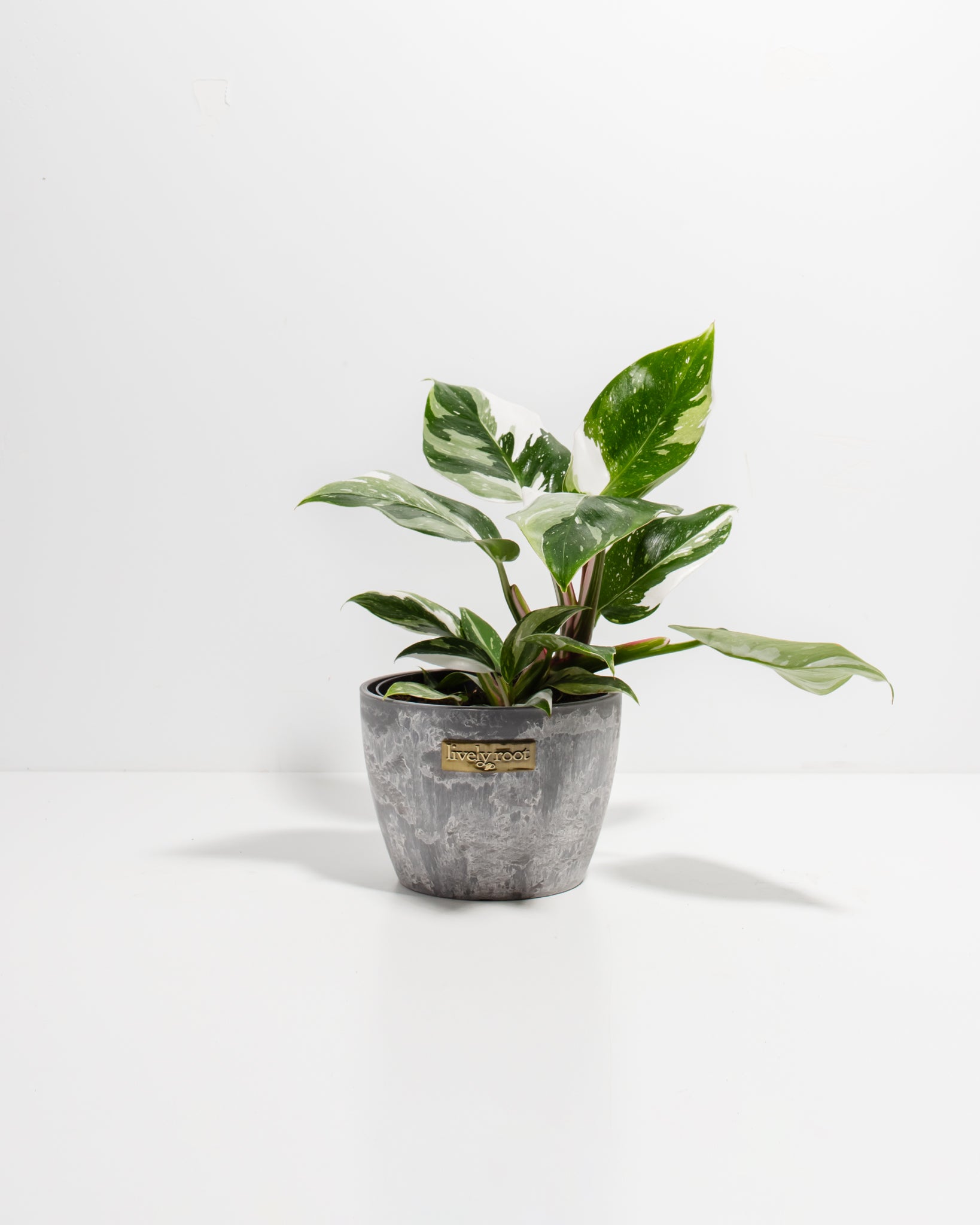
The White Princess Philodendron (Philodendron erubescens) is a heart-shaped leaf beauty that's a rare sight for plant lovers. With stunning variegation and easy care needs, the Philodendron White Princess can be the center of attention in any living space.
It enjoys bright, indirect light and can reach 4 feet tall. If grown on the parch, bring it indoors during the cooler months.

Keep your plant in bright, indirect light to increase the variegation. Direct sunlight for a couple of hours a day in an eastern-facing window will also help it to maintain its pink leaves.
Allow the top half of the soil to dry out between waterings. Use filtered, bottled, or tap water sitting 24 hours to release the chemicals and water enough that the water discharges out of the drainage holes. This plant does not like to sit in water. Once the water is fully drained, replace it into the cache or decorative pot.
Average humidity levels at least 40% is adequate for this plant's needs. If her leaf edges are turning brown, increase the humidity around this plant or add a humidifier closeby.
Keep this plant out of cold drafts near open windows or doors.
This plant will not tolerate frost or temperatures below 60°F if left outside.
Apply a liquid fertilizer especially formulated for indoor plants. Water the soil before application each time. Apply during the spring, summer and fall season. Let it rest during the winter.
When receiving the Philodendron plant, do not repot immediately but wait at least 6-12 months. Repot in the spring, using a 2" bigger pot. (Too big of a pot could cause the soil to dry slower, which can cause blackening leaves.)
Place a piece of screening at the bottom of the container over the drainage hole to secure the soil and allow it to drain. Use a well draining potting mix with one part perlite and one part orchid bark.
Lift the plant and release the roots against the existing planter. Use a clean knife or garden trowel to wedge between the pot and the soil to loosen.
Inspect the roots. Notice if there are any dead or rotting roots and trim off with sterile pruners.
Ensure the plant is sitting about 1 inch below the edge of the pot to avoid water spillage. Add more soil and backfill around the sides by tamping down. Fill up to the soil line but not over.
Water thoroughly, leaving the soil damp but not soggy. If settling occurs, add more soil.
Water well to dampen the soil and let it drain.
To clean the leaves and alleviate dust particles, give it a shower from above. Fill a watering can with filtered, distilled or tap water that has been sitting for 24 hours. Place the plant in a sink and lightly wash the leaves with a shower spray end watering can. Trim off any brown or yellowing leaves with sterile scissors. Remove any debris from the soil and replenish soil if needed. Inspect for any insects at this time.
Stem Cutting:
In early spring, take a philodendron cutting, use sharp pruners to remove a cutting from a tip off the vine. Cut at least 5-6 inches of stem to propagate with aerial root or nodes attached.
Place in a vase with water to root. Change the water each week with filtered, bottled, or tap water sitting at least 24 hours.
After 3-4 weeks, check to make sure the stem has 1-2 inch, well-formed roots. If so, it's time to plant.
*Fill a small container with drainage holes (too large of a container for the cutting will make it challenging to regulate watering needs) using an indoor well-draining potting mix.
Mix a little rooting hormone into the soil. Poke a hole in the soil with a pencil. Then, place the cutting in the hole and tamp the soil down around it.
Water the plant and keep it in medium to bright indirect sunlight. After 4-6 weeks, the roots should establish.
Division:
Divide the philodendron in the early spring when emerging from dormancy.
Pull from the container and cut through the roots with a sharp knife or pruners.
Repot in a rich, indoor potting soil mix.
Use a container 2 inches bigger than the root ball with drainage and is deep enough for the roots to grow. Place the roots at the same level as the previous pot adding soil at the bottom if necessary.
Set it in bright, indirect sunlight and water.
Check the moisture and humidity each day and add misting to keep the soil moist while the roots establish.
After 6-8 weeks, roots will begin to form.
The White Princess Philodendron, scientifically known as Philodendron erubescens “White Princess”, is a stunning tropical plant with striking variegated leaves featuring a green, white, and pink mix. This beautiful plant belongs to the Araceae family and is sought after for its unique foliage and relatively easy-care requirements. It is an ideal porch plant in hardiness zones 9, 10, and 11. It will not tolerate frost or temperatures below 60°F if left outside. Philodendron White Princess prefers bright, indirect light but can tolerate lower light conditions.
It’s easy to care for and suitable for novice and experienced plant lovers. Because of its pristine white variegation, the White Princess Plant is often associated with elegance, beauty, and purity. In various cultures, it symbolizes growth, abundance, and good fortune, making it a thoughtful gift for friends and family.
It’s important to note that the white Philodendron Princess is toxic to pets if ingested. Pet owners should keep this plant out of the reach of curious cats and dogs to avoid health issues.
Other philodendron plants that are equally stunning include Philodendron Pink Princess (Philodendron erubescens ‘Pink Princess’), known for its dark green leaves with striking pink variegation, Philodendron Birkin (Philodendron hederaceum ‘Birkin’), featuring dark green leaves with creamy white pinstripes, and more.
The White Philodendron Princess is an easy-to-care-for plant that thrives in various indoor conditions. Let’s explore some key care tips below:
Water the Philodendron White Princess when the top inch of soil feels dry. Avoid overwatering, as it can lead to root rot. This plant prefers bright, indirect light but can tolerate lower light conditions. Direct sunlight should be avoided as it can scorch the leaves.
The ideal temperature range for your White Princess Philodendron is between 65-80°F (18-27°C). It thrives in medium humidity. During dry spells, you can mist the plant occasionally to prevent brown leaf tips.
Use a well-draining peat-based potting mix to ensure good aeration and prevent waterlogging. Repotting should occur every 1-2 years or when the plant outgrows its current pot. Choose a pot that is one size larger than the current one. Feed your Philodendron White Princess with a balanced liquid fertilizer every 4-6 weeks during the growing season (spring and summer).
Philodendron propagation can be done via stem cuttings. Simply cut a healthy stem with a few leaves and place it in water or soil until roots develop. As Philodendron erubescens is a self-header, a large White Princess can be propagated by dividing it into smaller sections.
Prune the plant to maintain its shape and remove any yellow or dead leaves. Regularly clean the leaves with a damp cloth to keep them dust-free and allow for better photosynthesis.
Watch out for common issues with your White Philodendron Princess, such as yellowing leaves, which can indicate overwatering, and browning leaf tips, which can indicate low humidity. Inspect the plant regularly for pests like spider mites and treat them promptly with insecticidal soap or neem oil.
The White Princess Philodendron is a versatile and elegant houseplant that can brighten any indoor space. Whether you’re looking to complement your existing decor or create a stunning focal point, this plant is an excellent choice for various settings and plant companions.
Enhance your space with these perfect matches:
Discover pet-friendly alternatives for your White Philodendron Princess.
Transform your space with the elegance of a White Princess Philodendron! Buy yours now and elevate your indoor oasis with Lively Root!


livelyroot.com
@livelyroot
[title]
[message]Love it? Add to your wishlist
Your favorites, all in one place. Shop quickly and easily with the wishlist feature!